Foundayo (orforglipron), the only oral GLP-1 taken without food or water restrictions, was associated with significant weight loss in women at every stage of menopause – Eli Lilly
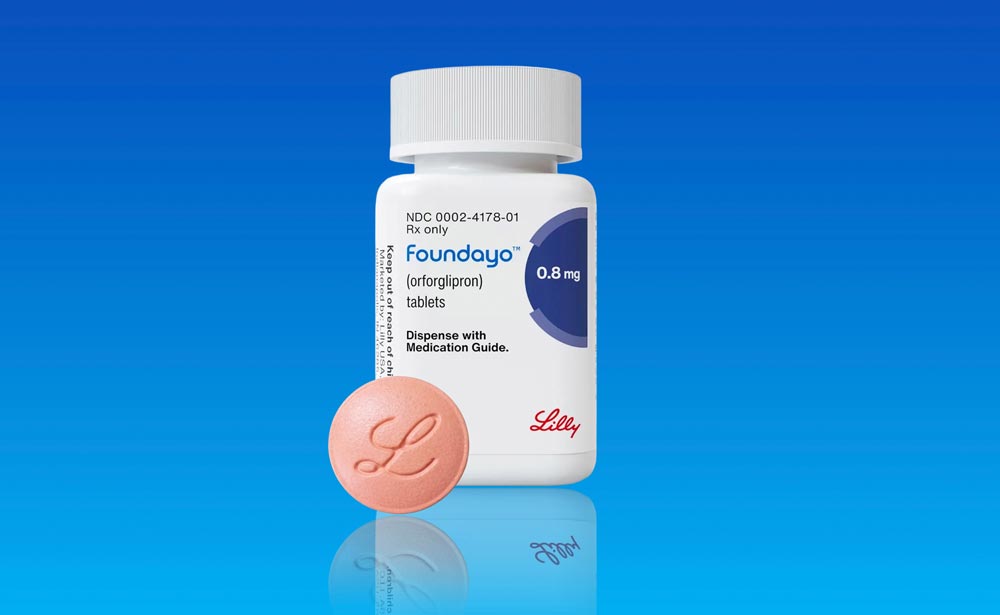
Eli Lilly and Company, the maker of Zepbound (tirzepatide), announced results demonstrating that women with obesity or overweight who took the highest dose of Foundayo experienced significant weight loss at every stage of menopause. These findings, based on post-hoc analyses of more than 1,500 female participants in the ATTAIN-1 and ATTAIN-2 clinical trials, were presented at the American Diabetes Association (ADA) 86th Scientific Sessions.
Menopause is a major, yet often overlooked, driver of weight gain. Hormonal changes during this time can accelerate fat accumulation, particularly around the abdomen, and make weight loss harder to achieve and sustain. Despite affecting tens of millions of women in the U.S. alone, menopausal status has rarely been evaluated as a factor in obesity treatment efficacy.
“Menopause can be an incredibly frustrating time for many women, partly because weight gain often feels beyond their control, and the biology of menopause can undermine even the most determined efforts to manage weight,” said Rachel Batterham, OBE, MBBS, Ph.D., FRCP, Lilly senior vice president of medical innovation and external engagement. “These findings show that Foundayo was associated with meaningful weight loss in women at every stage of menopause. For women who have seen their weight become harder to manage precisely when their health is more at risk, this is what progress could look like.”
Across ATTAIN‑1 and ATTAIN‑2, Foundayo was associated with significant reductions in body weight at 72 weeks across menopausal stages. In ATTAIN‑1, women who were pre‑, peri‑ and post‑menopausal lost up to 28.0 lbs (12.8%), 30.4 lbs (14.4%) and 28.2 lbs (14.1%) respectively on the highest dose of Foundayo. In ATTAIN‑2, women with type 2 diabetes who were pre‑, peri‑ and post‑menopausal lost up to 23.4 lbs (11.3%), 18.5 lbs (8.9%) and 27.8 lbs (13.6%) respectively. At the highest dose, up to 51.5% of women in ATTAIN-1 and up to 44.2% in ATTAIN-2 experienced ≥15% weight loss. Women also experienced meaningful reductions in waist circumference, with decreases of up to 4.9 inches (12.5 cm) in ATTAIN‑1 and up to 4.3 inches (11.0 cm) in ATTAIN‑2 at 72 weeks.
About ATTAIN-1, ATTAIN-2 and ATTAIN clinical trial program
ATTAIN-1 (NCT05869903) is a Phase 3, 72-week, randomized, double-blind, placebo-controlled trial comparing the efficacy and safety of Foundayo 5.5 mg, 9 mg and 17.2 mg as a monotherapy to placebo in adults with obesity, or overweight with at least one of the following comorbidities: hypertension, dyslipidemia, obstructive sleep apnea or cardiovascular disease, who did not have diabetes. The trial is the first Phase 3 study of this patient population in which treatment was evaluated as an adjunct to exercise and a balanced, healthy diet rather than a reduced-calorie diet. The trial randomized 3,127 participants across the U.S., Brazil, China, India, Japan, South Korea, Puerto Rico, Slovakia, Spain and Taiwan in 3:3:3:4 ratio to receive either 5.5 mg, 9 mg or 17.2 mg Foundayo or placebo. The primary objective of the study was to demonstrate that Foundayo (5.5 mg, 9 mg or 17.2 mg) is superior to placebo in body weight reduction from baseline after 72 weeks in people with a BMI ≥30.0 kg/m² or a BMI ≥27.0 kg/m² with at least one weight-related comorbidity and a history of at least one self-reported unsuccessful dietary effort to lose body weight.
ATTAIN-2 (NCT05872620) is a Phase 3, 72-week, randomized, double-blind, placebo-controlled trial comparing the efficacy and safety of Foundayo 5.5 mg, 9 mg or 17.2 mg as monotherapy with placebo in adults with obesity or overweight and type 2 diabetes. The trial randomized over 1,600 participants across the U.S., Argentina, Australia, Brazil, China, Czechia, Germany, Greece, India, South Korea and Puerto Rico in a 1:1:1:2 ratio to receive either 5.5 mg, 9 mg or 17.2 mg Foundayo or placebo. The primary objective of the study was to demonstrate that Foundayo (5.5 mg, 9 mg or 17.2 mg) is superior to placebo in mean body weight change from baseline at 72 weeks in people with a BMI ≥27.0 kg/m² and type 2 diabetes who are on stable treatment with either diet/exercise alone or up to three oral antihyperglycemic medications.
In both trials, all participants in the Foundayo treatment arms started the study at a dose of Foundayo 0.8 mg once-daily and then increased the dose in a step-wise approach at four-week intervals to their final randomized maintenance dose of 5.5 mg (via steps at 0.8 mg and 2.5 mg), 9 mg (via steps at 0.8 mg, 2.5 mg and 5.5 mg) or 17.2 mg (via steps at 0.8 mg, 2.5 mg, 5.5 mg, 9 mg and 14.5 mg). These trials were conducted using an investigational formulation of Foundayo at dosages equivalent to Foundayo tablets.