How do we tackle preferences regarding animal-derived medicines?

Clinical Pharmacy Congress highlights
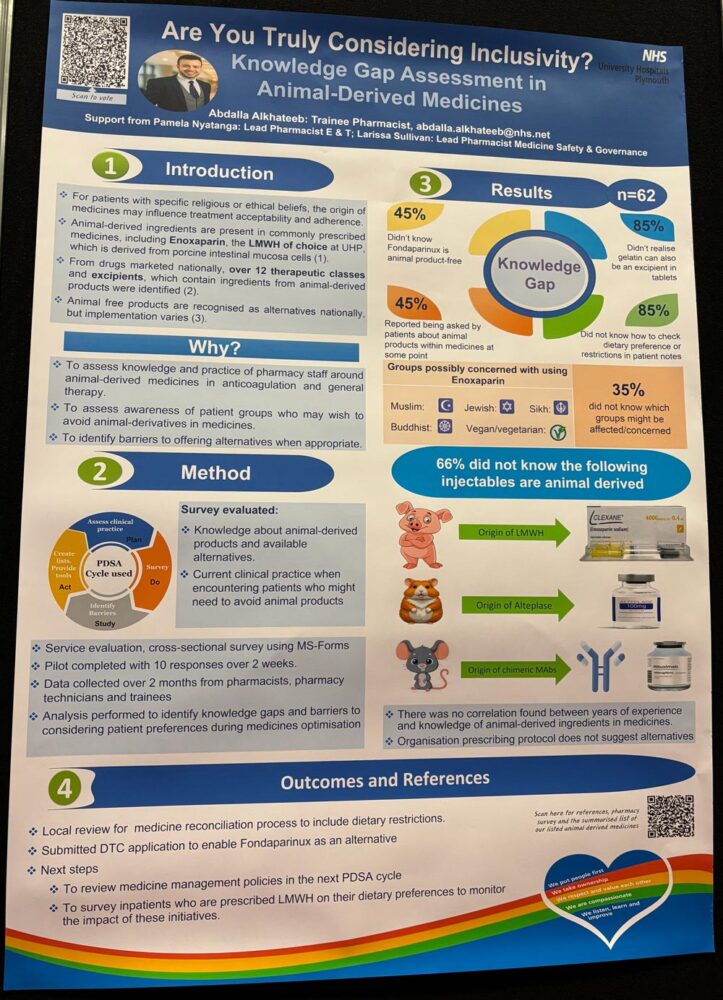
For patients with religious or ethical beliefs — including Muslims, Jews, Sikhs, Buddhists, and vegans — the animal origin of a medicine can directly affect whether they accept or adhere to treatment. However, a survey by Abdalla Alkhateeb, Trainee Pharmacist at University Hospitals Plymouth NHS Trust, suggests that pharmacy staff may not always know enough about animal products in medicines to discuss the issues with patients. It is estimated that about 2% of the population could be affected.
Animal-derived ingredients are present in many commonly prescribed medicines – and while animal-free alternatives exist, their usage varies considerably. For example, at University Hospitals Plymouth the low molecular weight heparin (LMWH) of choice is enoxaparin, a product that is derived from porcine intestinal mucosa cells. Fondaparinux, which contains no animal products, is reserved for patients with acute coronary syndrome.
Survey findings
An anonymised survey of 62 pharmacists, pharmacy technicians and trainees at University Hospitals Plymouth NHS Trust Derriford Hospital was conducted over a two-month period. A total of 30 people responded and the results showed that:
- 85% of respondents did not realise that gelatine can be used as an excipient in tablets as well as capsules
- 85% did not know how to check for dietary preferences or restrictions in patient notes
- 66% were unaware that some commonly used injectables – including enoxaparin (LMWH), alteplase, and chimeric monoclonal antibodies – are animal-derived.
- 45% did not know that fondaparinux is animal product-free
- 35% could not identify which patient groups might wish to avoid animal-derived medicines
Notably, there was no correlation between years of experience and knowledge in this area, suggesting this is a systemic gap rather than one resolved simply by time in practice. The existing organisational prescribing protocol also does not currently suggest alternatives.
Mr Alkhateeb explained that an easy way to identify people who may wish to avoid animal products in medicines would be to ask about dietary restrictions when conducting medication reconciliation interviews.
Action taken
In response to these findings the medicine reconciliation protocol has been revised to incorporate dietary restrictions. A Drug and Therapeutics Committee application has been submitted to enable fondaparinux as an alternative to enoxaparin where appropriate.
Future work includes reviewing medicine management policies in the next PDSA cycle and surveying inpatients prescribed LMWH about their dietary preferences to assess the real-world impact of these changes.