Group consultations improve lipid management in Primary Care
Clinical Pharmacy Congress highlights
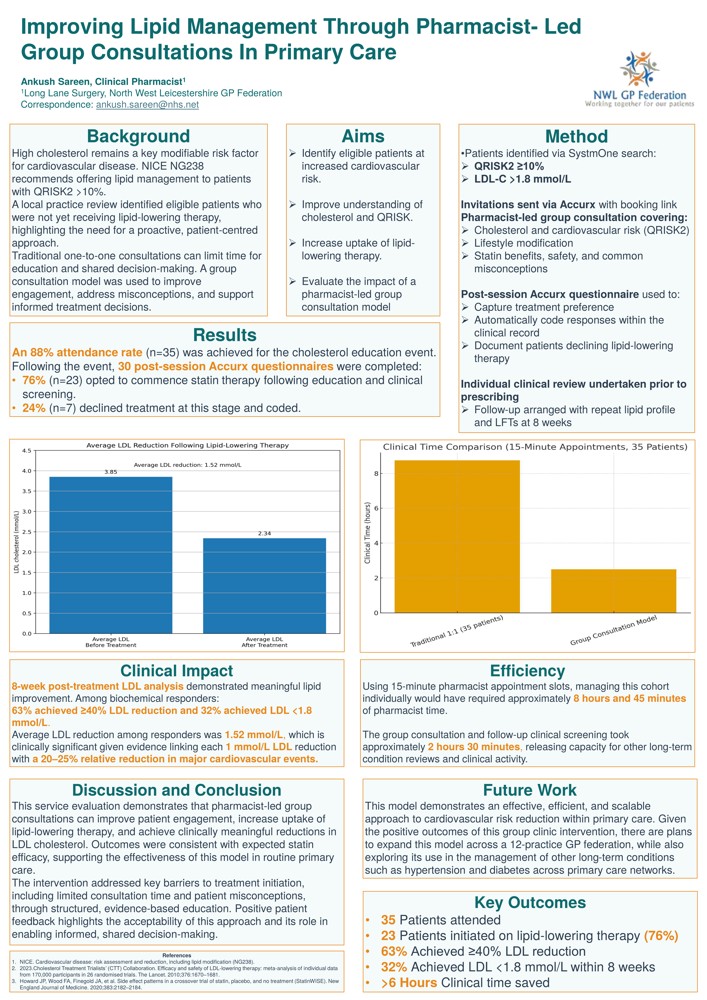
High cholesterol is a key modifiable risk factor for cardiovascular disease, but many eligible patients are not receiving lipid-lowering therapy. A service evaluation by Ankush Sareen (Clinical Pharmacist, Long Lane Surgery, North West Leicestershire GP Federation) demonstrates how a pharmacist-led group consultation model can address this gap — improving patient engagement, increasing treatment uptake, and delivering meaningful clinical outcomes.
Conventional one-to-one appointments often leave insufficient time for education and shared decision-making, contributing to patient misconceptions about statins and low treatment uptake. The group consultation model was designed to tackle these barriers directly.
Method
Patients with a QRISK2 score ≥10% and LDL-C cholesterol >1.8 mmol/L who were not yet on lipid-lowering therapy were identified via a SystmOne and invited by Accurx with a self-booking link. The pharmacist-led group session covered cardiovascular risk, lifestyle modification, and the benefits and safety of statins. Common misconceptions were also addressed. A post-session Accurx questionnaire captured treatment preferences and automatically coded responses in the clinical record. Each patient then received an individual clinical review prior to prescribing, with a repeat lipid profile and liver function tests at eight weeks.
FIndings
Attendance was high, with 88% of invited patients (n=35) taking up the invitation to the group consultation. Following the session, 23 patients opted to start statin therapy and 7 declined. At eight weeks, results among biochemical responders were clinically significant: 63% achieved a ≥40% reduction in LDL cholesterol, and 32% reached the target of LDL <1.8 mmol/L. The average LDL reduction was 1.52 mmol/L. The authors noted that each 1 mmol/L LDL reduction is associated with a 20–25% relative reduction in major cardiovascular events. Mr Sareen commented that the feedback from patients had been particularly favourable, saying that their questions had been answered.
Managing the same cohort through individual 15-minute appointments would have required approximately eight hours and 45 minutes of pharmacist time. The group model took around two and a half hours — releasing over six hours of clinical capacity for other long-term condition work.
Next steps
For primary care teams looking to improve cardiovascular outcomes efficiently, this approach offers a replicable template. Plans are now underway to scale this model across a 12-practice GP federation, with potential expansion into hypertension and diabetes management.
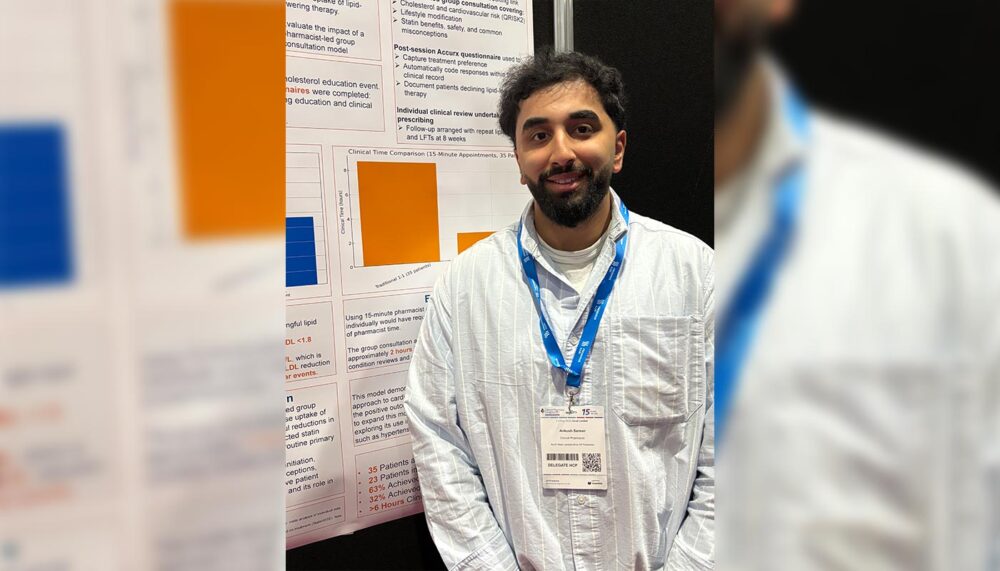
Photo: Ankush Sareen, Clinical Pharmacist, Long Lane Surgery, North West Leicestershire GP Federation