European Commission approves Dupixent (dupilumab) as the first targeted medicine in over a decade for chronic spontaneous urticaria – Sanofi + Regeneron
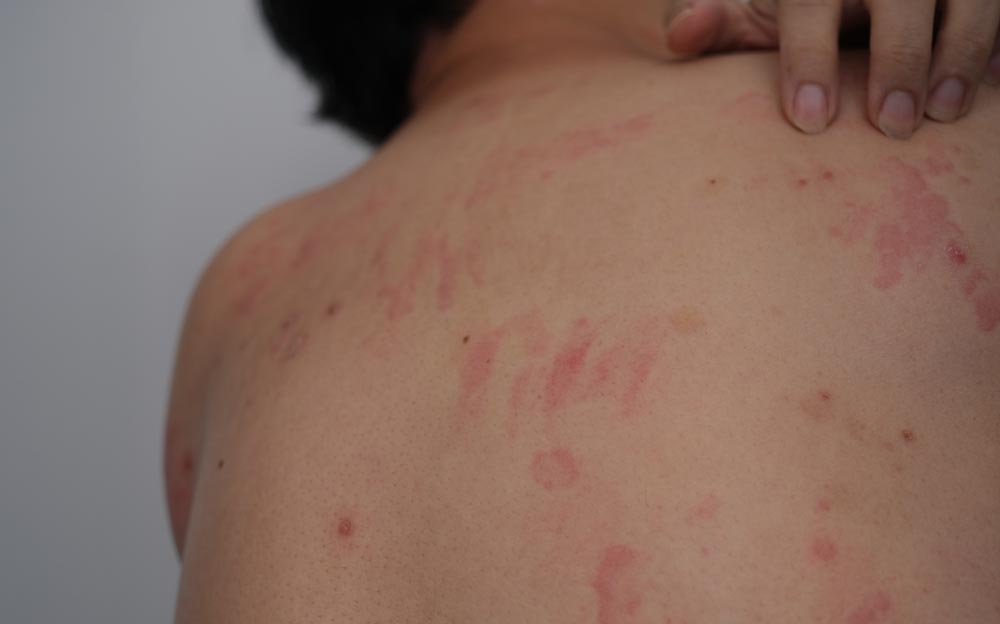
The European Commission has approved Dupixent (dupilumab) for the treatment of moderate-to-severe chronic spontaneous urticaria (CSU) in adult and adolescent patients 12 years and above with inadequate response to histamine-1 antihistamines (H1AH) and who are naive to anti- immunoglobulin-E (IgE) therapy for CSU. Eligible patients can use Dupixent as a first-line targeted treatment option.
“The unpredictable nature of chronic spontaneous urticaria leaves patients guessing when they’ll have their next outbreak of disruptive, debilitating hives and itch, which can make life challenging,” said Tonya Winders, President & CEO, Global Allergy & Airways Patient Platform. “Dupixent is proven to reduce these intense symptoms and has the potential to make a positive impact on people struggling to control this disease.”
“Standard-of-care, first-line treatment options like antihistamines offer limited relief for many people living with uncontrolled chronic spontaneous urticaria, leaving them to face unrelenting cycles of itch and hives,” said Alyssa Johnsen, MD, PhD, Global Therapeutic Area Head, Immunology Development at Sanofi. “Dupixent significantly reduced these symptoms of CSU and led to more patients experiencing well-controlled disease or a complete response compared to placebo in two phase 3 studies. Now, eligible patients with CSU in the EU have a new option that is proven to reduce itch and hives.”
The approval is based on data from two phase III clinical studies in the LIBERTY-CUPID program (NCT04180488). Study A and Study C included 284 patients aged 12 years and older who were symptomatic despite the use of antihistamines and who were naïve to anti-IgE therapy. Both studies assessed Dupixent as an add-on therapy to standard-of-care antihistamines compared to antihistamines alone and demonstrated Dupixent significantly reduced urticaria activity (a composite of itch and hives), and individual measures of itch and hive severity compared to placebo at 24 weeks. Dupixent also increased the percentage of patients with well-controlled disease and complete response at 24 weeks compared to placebo. Study B (n=108) provided additional safety data and evaluated Dupixent in patients aged 12 years and older who were inadequate responders or intolerant to anti-IgE therapy and symptomatic despite antihistamine use.
Safety results from Study A, Study B and Study C were generally consistent with the known safety profile of Dupixent in its approved indications. The most common adverse reactions for Dupixent overall are injection site reactions, conjunctivitis, conjunctivitis allergic, arthralgia, oral herpes, and eosinophilia. Additional adverse reactions of injection site induration, injection site dermatitis, and injection site hematoma were reported in the CSU adult and adolescent studies. Adverse events more commonly observed with Dupixent (≥5%) than placebo in patients with CSU were injection site reaction, COVID-19, hypertension, CSU, and accidental overdose.
“The approval of Dupixent for certain adults and adolescents with chronic spontaneous urticaria in the European Union represents the first innovation for patients with this disease in over a decade,” said George D. Yancopoulos, MD, PhD, Board co-Chair, President and Chief Scientific Officer at Regeneron. “Physicians now have a new approach for CSU with Dupixent, as the only treatment that inhibits IL4 and IL13, two key drivers of type 2 inflammation, and can offer patients significant improvement in debilitating itch and hives. This approval further demonstrates the ability of Dupixent to advance the treatment landscape for yet another chronic type 2 inflammatory disease, with a well-established safety profile across its indications.”
Beyond the EU, Dupixent is also approved for CSU in certain adults and adolescents in several countries including the US and Japan.
About the Dupixent CSU phase III study program
The LIBERTY-CUPID phase III program evaluating Dupixent for CSU consists of Study A, Study B, and Study C. These studies were randomized, double-blind, placebo-controlled clinical studies that evaluated the efficacy and safety of Dupixent as an add-on therapy to standard-of-care antihistamines compared to antihistamines alone. Studies A and C were replicate studies that assessed patients aged 6 years and older who remained symptomatic despite the use of antihistamines and were naïve to anti-IgE therapy. Study B was conducted in patients aged 12 years and older who were symptomatic despite use of antihistamines and were inadequate responders or intolerant to anti-IgE therapy. During the 24-week treatment period in all three studies, all patients received an initial loading dose followed by either 300 mg Dupixent every two weeks, or 200 mg every two weeks for adolescents weighing <60 kg.
The primary endpoint in all three studies assessed the change from baseline in itch and hives (weekly urticaria activity score [UAS7], 0-42 scale). The key secondary endpoint (also assessed at 24 weeks) was change from baseline in itch (measured by the weekly itch severity score, 0-21 scale). Additional secondary endpoints assessed at 24 weeks evaluated:
i) Change from baseline in hives (measured by the weekly hive severity score, 0-21 scale)
ii) Proportion of patients achieving well-controlled disease status (UAS7 ≤6)
iii) Proportion of patients with complete response (UAS7=0).
The results from Studies A and B were published in The Journal of Allergy and Clinical Immunology.
Citation: Dupilumab in patients with chronic spontaneous urticaria (LIBERTY-CSU CUPID): Two randomized, double-blind, placebo-controlled, phase 3 trials. Authors: Marcus Maurer, MD ∙ Thomas B. Casale, MD ∙ Sarbjit S. Saini, MD et al. Published online February 28, 2024 J Allergy Clin Immunol 2024; DOI: 10.1016/j.jaci.2024.01.028