EC Approves RINVOQ for Severe Alopecia Areata in Adults and Adolescents Aged 12 Years and Older – AbbVie

AbbVie announced that the EC has approved Rinvoq (upadacitinib; 15 mg and 30 mg, once daily) for the treatment of adult and adolescent patients 12 years and older with severe alopecia areata (AA).
“The European Commission’s approval of Rinvoq provides a new treatment option for the severe alopecia areata community in the EU with demonstrated scalp regrowth, including complete scalp hair regrowth for some, that can support management of the disease. This approval provides another option for patients who continue to navigate physical and mental burden associated with severe alopecia areata, often overlooked due to stigma.” – Roopal Thakkar, M.D., executive vice president, research and development, chief scientific officer, AbbVie.
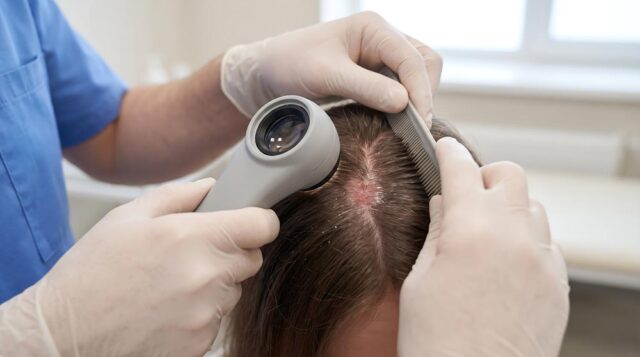
AA is an unpredictable autoimmune disease that causes a range of hair loss patterns, from sudden, round bald patches on the scalp to complete loss of all body hair, including scalp, face, eyebrows and eyelashes.2,3 Despite its immune-mediated nature, AA is often misunderstood as a cosmetic problem despite being associated with a wide-ranging impact on patients’ lives contributing to the physical, psychological, social and economic burden.4,5 According to a population‐based study, patients with alopecia areata face up to 40% higher risk of being diagnosed with new-onset depression and anxiety compared to the general population, and this risk increases in women.6,7
Data Supporting the EC Approval
The EC approval of Rinvoq is supported by previously reported data from the ongoing Phase 3 UP-AA clinical program (M23-716), which includes two replicate, randomized, placebo-controlled, double-blind studies evaluating the efficacy and safety of Rinvoq in adult and adolescent patients with severe AA.1
Both the 15 mg and 30 mg doses of Rinvoq in each study met the primary endpoint of SALT score ≤ 20 at week 24, with significantly more patients achieving ≥ 80% scalp hair coverage compared with placebo. Key secondary endpoints were also met for both doses in both studies, including complete scalp hair regrowth (SALT = 0) at week 24. The safety profile of both doses of Rinvoq in Period A was generally consistent with that observed in approved indications.
“Alopecia areata is a complex condition to treat often due to its unpredictable disease course and prognosis. The UP-AA results based on stringent endpoints demonstrated clinically meaningful scalp hair regrowth and improvements in eyebrows and eyelashes in 24 weeks, supporting Rinvoq as an important new treatment option for severe alopecia areata patients in Europe.” – Thierry Passeron, M.D., Ph.D., professor and chair, Department of Dermatology, Université Côte d’Azur.
Rinvoq is also approved in the European Union for the treatment of adults and adolescents with atopic dermatitis, and adults with radiographic axial spondylarthritis, non-radiographic axial spondylarthritis, psoriatic arthritis, rheumatoid arthritis, ulcerative colitis, Crohn’s disease, and giant cell arteritis, and adults and adolescents with non-segmental vitiligo.
About UP-AA Clinical Trials
UP-AA M23-716 was conducted as a single protocol that includes two replicate pivotal studies (Study 1 and Study 2) with randomization, investigative sites, data collection, analysis and reporting independent for each study. The Phase 3 randomized, placebo-controlled, double-blind studies evaluate efficacy and safety of upadacitinib in adult and adolescent subjects with severe alopecia areata. In Study 1 and Study 2 Period A, participants are randomized to one of three groups to receive upadacitinib 15 mg, upadacitinib 30 mg or placebo for 24 weeks. In Study 1 and Study 2 Period B, participants originally randomized to upadacitinib dose groups in Period A will continue their same treatment in Period B for 28 weeks. Participants originally randomized to placebo in Period A will either remain on placebo in Period B, or be randomized in one of two groups, based on their SALT score at week 24. In total, Study 1 and Study 2 Periods A and B span 52 weeks. Participants who complete Study 1 or Study 2 can join Study 3 and may be re-randomized to receive 1 of 2 doses of upadacitinib for up to 108 weeks. The two trials randomized 1,399 participants with severe AA ages 12 to 64 across 248 sites worldwide. More information on this trial can be found at www.clinicaltrials.gov (NCT06012240).