Equine Influenza: A surge that cannot be ignored
With 95 confirmed or suspected outbreaks recorded in Britain by early June 2026 and horse shows turning away horseboxes at the gate, the equine flu crisis has moved from a veterinary concern to an industry-wide emergency.
The Scale of the Outbreak
The United Kingdom is in the grip of its most significant equine influenza (EI) outbreak in recent history. Since late March and early April 2026, laboratory-confirmed cases have been reported across England, Scotland and Wales. By 8 June 2026, a total of 95 outbreaks had been recorded in Britain for the year, of which 82 were confirmed after 20 April alone, according to figures from the Equine Infectious Disease Surveillance (EIDS) team at Cambridge Veterinary School.
An EIDS update published on 14 May 2026 described what it called “sustained national circulation of equine influenza virus”, with 60 laboratory-confirmed outbreaks across 34 counties at that point. Notably, 35 of those 60 outbreaks involved horses with a recent history of travel, underscoring the role that horse movement plays in spreading infection between premises and regions.
The circulating strain has been identified as Equine Influenza A H3N8, specifically the Florida sub-lineage Clade 2 (FC2), which has been the dominant European strain for well over a decade and is associated with most UK outbreaks since around 2011. At this stage, no novel strain has emerged.
What Is Equine Influenza?
Equine influenza is a highly contagious viral respiratory disease caused by subtypes of the influenza A virus. It is one of the most commonly reported equine infectious respiratory diseases globally and can affect horses of all ages. The virus is primarily spread via respiratory droplets produced when infected horses cough, but indirect transmission via contaminated equipment, clothing and people moving between horses is also well documented. Infected horses can shed the virus for up to ten days or longer, allowing rapid spread within a yard if not quickly identified and controlled.
The incubation period ranges from 24 hours to five days. Clinical signs to watch for include:
- A raised temperature (above 38.5°C)
- A harsh, dry cough
- Nasal discharge
- Lethargy and poor performance
- Loss of appetite
- Enlarged submandibular lymph nodes
In partially immune horses, clinical signs may be subtle or absent, meaning infection can circulate subclinically for days before being detected. This makes regular temperature monitoring and observation especially important during periods of high disease activity.
Any horse displaying these signs should be isolated immediately and a veterinary surgeon contacted without delay.
Vaccination: The Most Important Tool
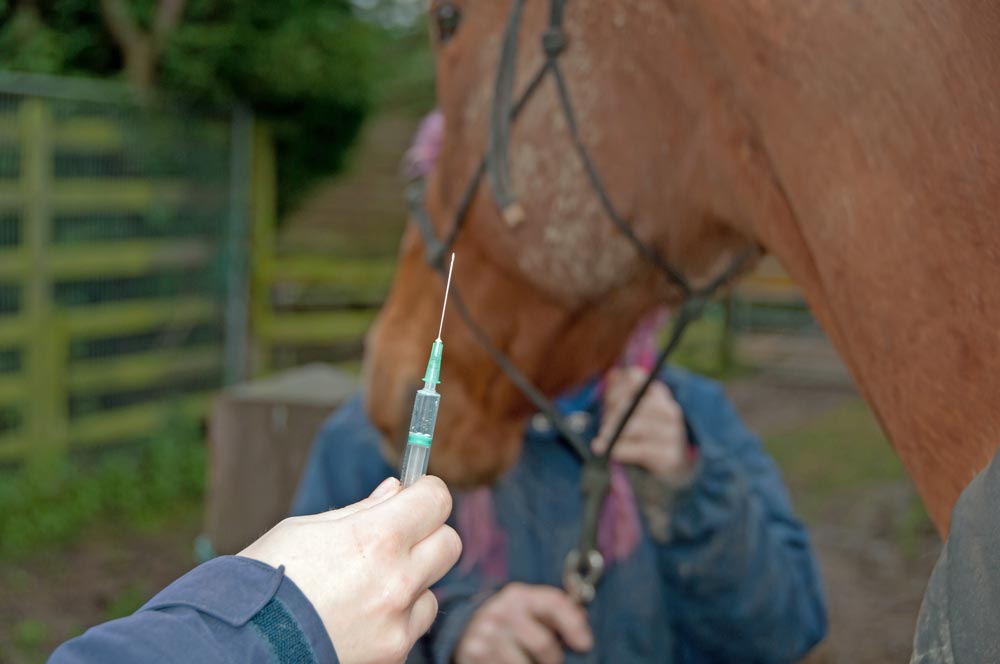
Vaccination is widely available, affordable and, according to veterinary authorities, the single most effective way to protect horses. While no vaccine guarantees complete prevention of infection, immunisation significantly limits the spread of the virus, reduces the severity of clinical signs and shortens recovery time.
In a significant development issued during the current outbreak, BEVA (the British Equine Veterinary Association) has urged equine vets to discuss implementing six-monthly booster vaccinations with their clients. BEVA’s guidance is explicit: “The evidence is unequivocal that in higher risk populations better protection is afforded by vaccinations at six-monthly intervals rather than 12.” The association notes that while science continues to advance, product ‘label claims’ rarely keep pace, and clinical practice should be guided by current evidence.
Lucy Grieve, Veterinary Projects Officer at BEVA, explained the rationale: “We know that giving a six-month booster raises the antibody levels back up to a level which helps reduce clinical signs and limit onward transmission of the virus. This is particularly important for horses that are travelling, competing or mixing with other horses.”
Of the 74 laboratory-confirmed outbreaks reported to EIDS by the end of May, 62% occurred in unvaccinated horses and a further 24% were of unknown vaccination status. Only 11% were confirmed to have been vaccinated. This pattern strongly supports the case for comprehensive vaccination across the equine population.
It is estimated that only 40% of the UK equine population is currently vaccinated against influenza. For herd immunity to have a meaningful protective effect, a far greater proportion needs to be covered.
BEVA and other equestrian bodies are emphatic that flu vaccination should not be regarded simply as a competition requirement. As BEVA’s Lucy Grieve put it: “Vets have a vital role in encouraging clients to move beyond seeing flu vaccination as simply a competition requirement and instead recognise it as a key responsibility in protecting both individual horses and the wider equine population during this current surge in cases.”
Outlook
The 2026 outbreak is a serious reminder that equine influenza remains a significant threat to horses at all levels of the industry – from pleasure horses in private yards to top-level sport horses and racehorses. The strong link between horse movement and outbreak spread means the risk is elevated at precisely the busiest point in the equestrian calendar.
Sources
- BEVA (British Equine Veterinary Association) — Six-month equine influenza vaccination guidance, June 2026
- EIDS (Equine Infectious Disease Surveillance), Cambridge Veterinary School — Outbreak updates, April–June 2026
- Horse & Hound — ‘A parade of hopeful rule-benders: horse shows crack down on vaccination in light of flu outbreaks’, 8 June 2026
- Horse & Hound — ‘Rising equine flu cases lead to special measures at Royal Ascot’
- Vet Times — ‘Equine vets urged to discuss 6-month equine flu boosters with clients’, 5 June 2026