Kerendia (finerenone) approved in EU for new indication in adult patients with heart failure with LVEF ≥40% – Bayer
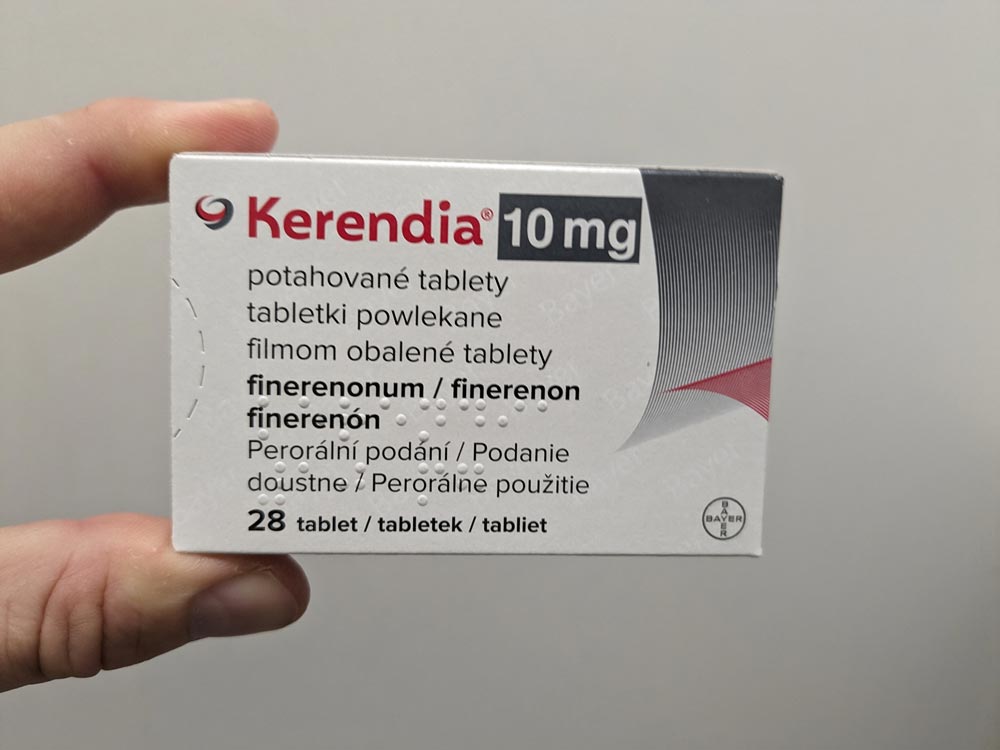
Bayer announced that the European Commission has granted approval in the European Union (EU) for Kerendia (finerenone), a selective, non-steroidal mineralocorticoid receptor antagonist (nsMRA), for the treatment of adults with heart failure (HF) with left ventricular ejection fraction (LVEF) ≥40%, i.e. HF with mildly reduced (HFmrEF) or preserved LVEF (HFpEF). In the EU, Kerendia (10mg, 20mg, 40mg) is now indicated for the treatment of symptomatic chronic heart failure with LVEF ≥40% in adults, expanding its use beyond the existing indication in patients with chronic kidney disease associated with type 2 diabetes.
“Patients with heart failure with left ventricular ejection fraction of 40% or greater represent a large and growing group of patients with a poor prognosis who face substantial clinical challenges including repeat hospitalizations for worsening heart failure, and high mortality risk,” said Prof. Scott D. Solomon, Harvard Medical School, Director, Clinical Trials Outcomes Center, Mass General Brigham, and Chairman of the study’s Executive Committee. “Finerenone addresses mineralocorticoid receptor overactivation, a key disease driver in heart failure, and based on its proven efficacy in the FINEARTS-HF trial can become a new pillar of comprehensive care to improve outcomes in this vulnerable population with persistent high unmet medical need.”
“The approval of the new indication for Kerendia in the EU is excellent news for millions of patients in Europe with heart failure and left ventricular ejection fraction of ≥40%. We are committed to ensuring that eligible patients have access to this important new treatment option to improve their outcomes,” said Christine Roth, Executive Vice President, Global Product Strategy and Commercialization and Member of the Pharmaceuticals Leadership Team at Bayer. “Kerendia has proven efficacy in reducing the combined risk of heart failure events and cardiovascular death, irrespective of background therapy and clinical setting as demonstrated in the FINEARTS-HF study. The robust evidence from five Phase III studies involving over 20,000 patients across multiple patient populations with chronic kidney disease and/or heart failure underscores the potential of Kerendia to become an essential treatment pillar for both heart failure with LVEF ≥40% and kidney disease. ”
Heart failure is a rapidly growing public health issue affecting over 64 million people worldwide and at least 15 million people in Europe alone. Approximately half of these patients suffer from HF with LVEF of ≥40%, which is frequently associated with multiple comorbidities such as chronic kidney disease, hypertension and atrial fibrillation, contributing to hospitalizations and mortality. Currently, these patients have only limited approved and guideline-directed therapy options, while facing a high risk for cardiovascular events. Time trends suggest this growing population will soon account for the majority of patients hospitalized with HF. Repeated hospitalizations are a major contributor to heart failure-related costs, which in the EU are estimated at 29 billion Euros annually.
The approval by the European Commission is based on the positive results from the pivotal Phase III FINEARTS-HF study, which showed that finerenone significantly reduced the composite primary endpoint of cardiovascular death and total (first and recurrent) heart failure events, defined as hospitalizations for HF or urgent HF visits, versus placebo in addition to usual therapy. The benefits of finerenone shown in the primary endpoint were consistent regardless of background therapy, comorbidities, or hospitalization status, including patient subgroups based on ejection fraction or baseline use of SGLT-2-inhibitors. The FINEARTS-HF results were presented at ESC Congress 2024, and simultaneously published in the New England Journal of Medicine. The study is part of the ongoing MOONRAKER program, one of the largest Phase III clinical trial programs to date in heart failure, including over 15,000 patients, which aims to establish a comprehensive understanding of finerenone in HF across a broad spectrum of patients and clinical settings.
FINEARTS-HF is a randomized, double-blind, placebo-controlled, multicenter, event-driven Phase III study investigating the efficacy and safety of finerenone (Kerendia) for the prevention of cardiovascular death and heart failure (HF) events in patients with a diagnosis of symptomatic heart failure (New York Heart Association class II-IV) with a left ventricular ejection fraction (LVEF) of ≥40%, measured by any modality within the last 12 months as well as receiving diuretic treatment for at least 30 days prior to randomization. The primary endpoint of FINEARTS-HF was the composite of cardiovascular death and total (first and recurrent) HF events, defined as hospitalizations for HF or urgent HF visits.
Around 6,000 patients were randomized from more than 630 sites across 37 countries worldwide to receive either finerenone or placebo once daily. In addition, patients in the study received usual therapy to treat symptoms and comorbidities.
See citation- Solomon SD, McMurray JJV et al. Finerenone in Heart Failure with Mildly Reduced or Preserved Ejection Fraction. N Engl J Med 2024;391:1475 DOI: 10.1056/NEJMoa2407107.