Apixaban shows less bleeding risk than rivaroxaban in venous thrombosis treatment
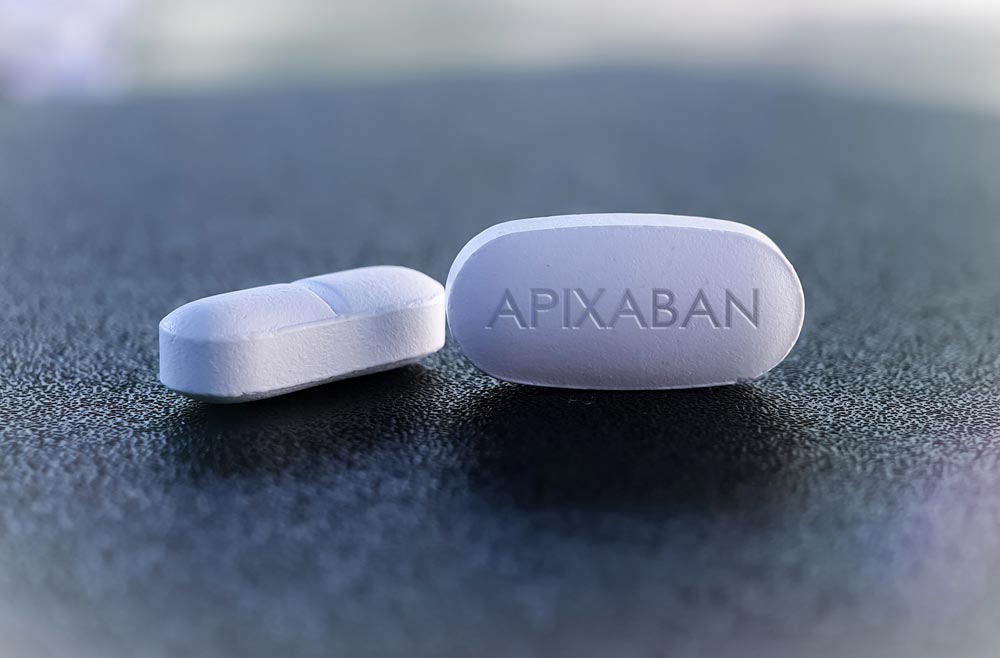
In terms of clinically relevant bleeding, apixaban is safer than rivaroxaban in the treatment of venous thrombosis, researchers concluded on March 11, 2026 in the NEJM/New England Journal of Medicine.
“Among patients with acute venous thromboembolism, the risk of clinically relevant bleeding was significantly lower with apixaban than with rivaroxaban during the 3-month treatment period,” the authors said.
As background, they noted that apixaban and rivaroxaban are the most frequently prescribed oral anticoagulants used to treat acute venous thromboembolism. But to date there has been uncertainty about the difference in bleeding risk between the two medications.
The COBRRA trial, led by researchers at The Ottawa Hospital in Canada, was designed to specifically compare bleeding in acute venous thromboembolism patients treated with apixaban and rivaroxaban The trial took place at 32 sites in Canada, Australia and Ireland.
The researchers enrolled and assigned 2760 eligible subjects with acute symptomatic pulmonary embolism or proximal deep-vein thrombosis to treatment with apixaban or rivaroxaban for 3 months.
Apixaban subjects (n=1370) received a dose of 10 mg twice daily for 7 days followed by 5 mg twice daily. Rivaroxaban subjects (n=1390) received a dose of 15 mg twice daily for 21 days followed by 20 mg daily.
The primary outcome was clinically relevant bleeding, a composite of major bleeding or clinically relevant nonmajor bleeding.
The investigators reported that a primary-outcome bleeding event occurred in 44 of 1345 subjects (3.3%) in the apixaban cohort and 96 of 1355 subjects (7.1%) in the rivaroxaban cohort, a statistically significant difference (P<0.001).
Death from any cause, the secondary endpoint of the trial, occurred in 1 patient (0.1%) in the apixaban group and in 4 patients (0.3%) in the rivaroxaban group (relative risk).
“These results clearly show that apixaban is the safer option for treating venous thrombosis,” said lead author Dr. Lana Castellucci, senior scientist and thrombosis physician at The Ottawa Hospital and professor at the University of Ottawa. “This trial provides highly anticipated evidence for physicians and should bring real peace of mind to venous thrombosis patients, who often live with the dual fear of blood clot recurrence and bleeding.”