AI predicts survival in patients with spinal tumours
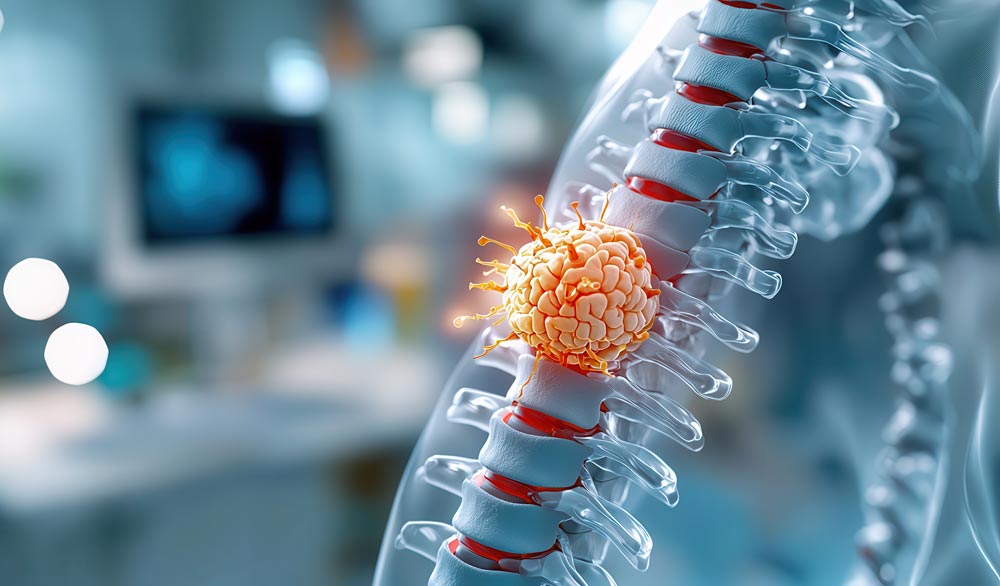
A new AI-powered model has been shown to advance treatment planning for spinal metastasis by calculating patients’ chances of survival. Doctors can then make informed decisions about, for example, whether surgery is an appropriate option.
Spinal metastasis, the spread of cancer to the spine, is a frequent complication in advanced cancer. It often causes severe pain and paralysis, significantly impacting quality of life. Surgery may be an option for patients with a favorable prognosis, while palliative care is recommended for patients with limited life expectancy.
An accurate prognosis is essential for selecting appropriate treatment. Traditional scoring systems, however, rely on outdated data and do not reflect recent advances in cancer therapy that have improved survival rates.
In a paper published in the journal Spine, researchers at Nagoya University Graduate School of Medicine say their highly accurate prediction tool was developed using machine learning and large-scale clinical data.
‘Traditional survival prediction models in clinical practice use data from the 1990s and 2000s,’ said Assistant Professor Sadayuki Ito. ‘Those models don’t fully reflect the impact of modern oncologic therapies, such as molecularly targeted therapies and immune checkpoint inhibitors.’
Most conventional prediction models also use retrospective medical records, while surgical decisions require accurate, real-time models based on prospective data. Although collecting prospective data is time-consuming and costly, it allows physicians and nurses to make objective evaluations using standardized criteria.
The researchers conducted a large-scale, multicenter prospective study. They analyzed 401 patients who underwent surgery for spinal metastasis at 35 medical institutions across Japan between 2018 and 2021.
The team used Least Absolute Shrinkage and Selection Operator (LASSO) logistic regression, a machine learning method, to identify significant predictors of one-year survival. Model performance was evaluated using the area under the receiver operating characteristic curve (AUROC) and calibration plots.
The model incorporated five preoperative factors that physicians can assess without specialised electronic devices: age, vitality index, ECOG performance status, bone metastases, and opioid use.
The model achieved a high predictive accuracy (AUROC = 0.762) and classified patients into three risk groups: low-risk (82.2% one-year survival rate), intermediate-risk (67.2% one-year survival rate), and high-risk (34.2% one-year survival rate). This simple scoring system allows surgeons to make more informed decisions about who should undergo surgery and how to tailor post-operative care.
Although the current model is based on Japanese clinical data, the researchers aim to apply it globally. ‘Our next step is to validate this system with data from medical institutions worldwide to ensure it can help patients globally,’ said Dr Ito.