Beyond the hot flush – the overlooked mental health burden of the menopause
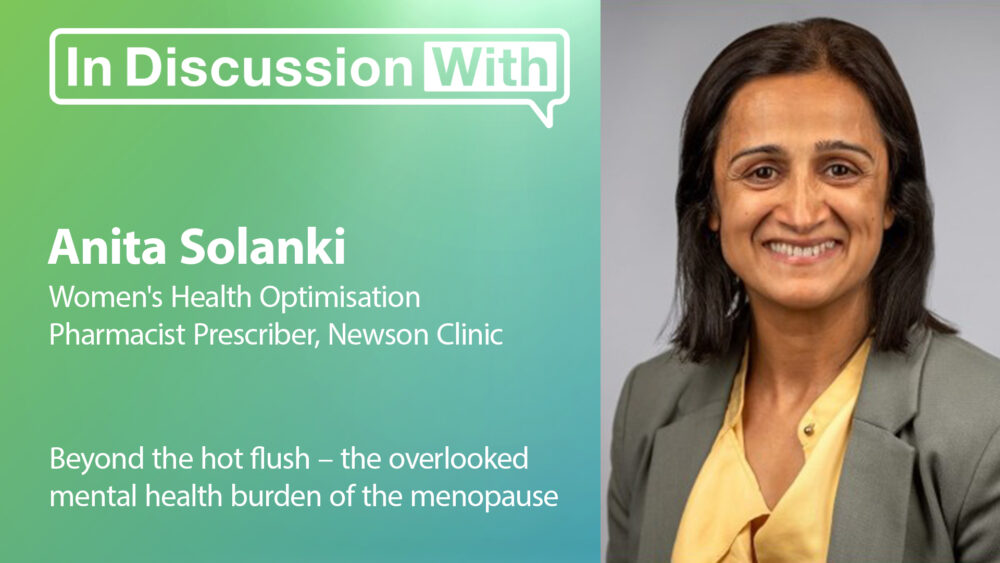
Anxiety, irritability, fatigue and low mood – not hot flushes – are the symptoms that trouble women most during the perimenopause and menopause. Yet these psychological symptoms are often explained away as stress or ageing, or treated with antidepressants, while their hormonal basis goes unrecognised. In this interview Anita Solanki, a pharmacist, clinician and health educator at Newson Health, explains how hormones influence mood, why antidepressants are not the answer for every woman and how the mental health effects of the menopause should be managed.
From mental health to menopause
Ms Solanki began her career in NHS hospital pharmacy at a time when clinical pharmacy was still a new concept. Education and training soon became a strong thread through her career. Clinically, her interest has long been mental health. “Providing information that’s up to date, accurate, in a way that people understand, has been the bedrock of my practice”, she says.
Conversations with friends of her own age about changing symptoms prompted her move into menopause care. Despite years of experience in multidisciplinary teams and higher education, “we didn’t understand the role of hormones or the impact of hormones”, she recalls. What surprised her most on joining Newson Health was the sheer scale of mental health problems among women at this stage of life.
Hormones and mood
There are receptors for oestrogen, progesterone and testosterone throughout the body, including the brain, so it makes sense to consider hormonally driven symptoms when assessing women’s mental health, explains Ms Solanki.
The link is clear in the menstrual cycle. Symptoms of pre-menstrual syndrome (PMS) often begin one to two weeks before a period, during the luteal phase, when progesterone levels can drop sharply. Ms Solanki describes premenstrual symptoms as a spectrum from 0 to 10. PMS sits at about 4, with tiredness, bloating, headache or irritability that recur regularly but remain manageable. Premenstrual dysphoric disorder (PMDD) lies at 7 to 10. The symptoms are similar but far more intense and debilitating, and some women experience suicidal thoughts. PMDD has been recognised as a psychiatric diagnosis since 2013. Women in their late 40s and early 50s have the highest suicide rate of any age group, she notes. “I don’t feel that’s a coincidence in relation to when hormones change”, she says.
Hot flushes are not the whole story
Research by Newson Health involving more than 1,000 women found that night sweats and hot flushes ranked only 43rd and 47th among reported symptoms. The top 10 were all psychological. The most common were fatigue, mood swings, irritability, anxiety and low motivation. Hot flushes “may or may not be part of somebody’s presentation, and it almost doesn’t matter”, says Ms Solanki.
A menopause symptom questionnaire is extremely helpful, she adds. It gives women a chance to stop, reflect and “join the dots” between their symptoms and their hormones. For clinicians, it shows the full range of symptoms so that the most troublesome can be targeted and the overall burden reduced over time.
Antidepressants: a role, but not for everyone
According to the Balance website, one in three perimenopausal women are offered antidepressants even when they do not meet the criteria for clinical depression. Antidepressants have a role, says Ms Solanki, but they are most effective for continuous moderate to severe depression. Many women’s symptoms fluctuate, occurring for only half the month. Response rates with antidepressants are around 30 to 60%, whereas response rates with hormones are significantly higher. Antidepressants are not licensed for menopausal symptoms but HRT is.
There are downsides too. Anxiety, agitation and irritability can worsen when antidepressants are started, and some women find memory and concentration problems are made worse. Moreover, SSRIs can also cause sexual dysfunction that may persist after treatment stops.
Deprescribing is possible but needs care, ideally working collaboratively with the clinician who started the treatment. Ms Solanki believes mental health teams would benefit from understanding hormones better, a message she delivered as keynote speaker at last year’s College of Mental Health Pharmacy conference.
Testosterone: “a game changer”
Testosterone is “the newest kid on the block”, says Ms Solanki. When she discusses it with women, “pretty much their next sentence will be – “game changer””. Testosterone levels fall with age, and this affects cognition, mood and energy, partly by influencing neurotransmitters such as dopamine. However, NICE currently recommends it only for low libido, because the research has not yet caught up with clinical experience. “It certainly can do more than that”, she says.
A holistic approach
In an ideal world, management would be multifactorial. Hormones address the source of the problem, but they cannot do everything on their own. Ms Solanki highlights four elements: hormones, good sleep (including working with the circadian rhythm), a balanced and varied diet – “your gut’s connected to your brain” – and regular activity, particularly strength training. “It’s certainly not one size fits all”, she says.
For reliable information, she recommends the Centre for Pharmacy Postgraduate Education (CPPE) menopause training as a starting point, along with resources from Newson Health and Newson Education. She warns that some sources, including the British National Formulary (BNF), still reflect legacy data from the 2002 Women’s Health Initiative study rather than today’s body-identical HRT.
A transformational role
For Ms Solanki, working in menopause care has been transformational. She routinely sees women’s outlook and demeanour change from one appointment to the next – something she had witnessed only a handful of times in previous roles. Yet she feels she has done little more than listen, provide information and be “a safe pair of hands and ears”. “I feel very privileged to be able to have these conversations with women and make the impact that I do”, she says.
About Anita Solanki
Anita Solanki BSc Pharm, MSc, MEd IP, MCMHP is a pharmacist, clinician and health educator, and a former NHS leader. She began her career in NHS hospital clinical pharmacy and has a special interest in education and training and in women’s health. Her clinical background is in mental health. She has held senior positions in the NHS including Mental Health Training Programme Director, North of England at Health Education England and Lead Pharmacist Education and Training Workforce Development. In 2025 she gave the keynote lecture on ‘Mental Health and the Menopause’ at the College of Mental Health Pharmacy conference.
She now works in menopause care at Newson Health. Last year she gave the keynote speech.