Advancing Pharmacy Worldwide: The role of the International Pharmaceutical Federation (FIP)
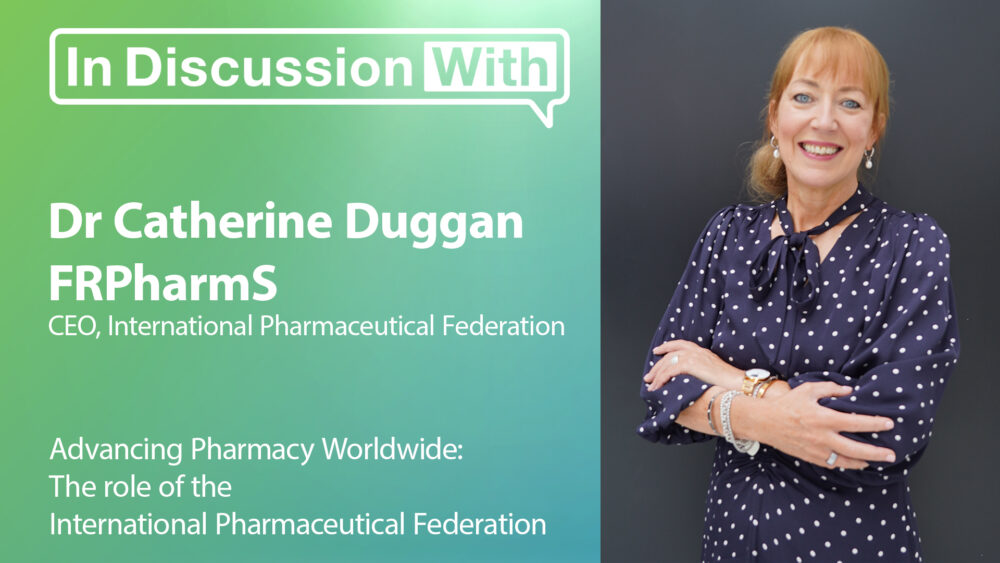
As the global health landscape undergoes rapid transformation, the role of the pharmacy profession has never been more critical to the stability and efficacy of health systems. In this interview Dr Catherine Duggan, the Chief Executive Officer of the International Pharmaceutical Federation (FIP), describes how FIP is working to meet these challenges. FIP is a non-governmental, not-for-profit organisation that was established in 1912; Dr Duggan emphasizes that the “absolute nugget of FIP is to advance pharmacy worldwide”. FIP represents a global footprint of 160 member organisations comprising pharmacists, pharmaceutical scientists, and educators across all six World Health Organization (WHO) regions, she adds.
Strategic alliances and global health governance
FIP maintains a unique and long-standing position within global health governance, having been in official relations with the WHO since 1948 and UNESCO since 2010. As a “non-state actor,” FIP works directly with the WHO through triennial work plans to ensure pharmacy plays its full role in global health. These plans address wide-ranging issues, including the global workforce, academic capacity, migration, and the maintenance of essential medicines lists.
Dr Duggan emphasises that FIP’s advocacy is more urgent than ever due to recent staffing cuts within the United Nations and WHO. She says that “pharmacy needs to step up and step into the space” created by these resource gaps to ensure global health goals are met. Through an alliance with medics, nurses, physiotherapists, and dentists, FIP presents pharmacy-related policy statements at the World Health Assembly. As a signatory to the 2018 Astana Declaration, FIP gained a higher profile within WHO. This high-level engagement has led the WHO Director-General, Dr. Tedros, to acknowledge that “no health system could create community pharmacy or hospital pharmacy services from scratch now” and that the profession is an “imperative for global health”.
The 2025–2030 Strategic Plan: A vision for access
FIP’s current strategic trajectory is defined by its 2025 – 2030 plan, which is closely aligned with the United Nations Sustainable Development Goals (SDGs). The core of this vision is a world where everyone has access to safe, affordable and effective medicines – a goal that Dr Duggan notes was severely challenged by the COVID-19 pandemic. To achieve this, the federation has identified six strategic objectives:
- Universal access: Advocating for access to medicines and health services for all, as a right rather than a privilege.
- Person-centred pharmaceutical care: Supporting pharmacists, educators, scientists, and technicians in providing well-being-focused pharmaceutical care.
- Innovation: Placing pharmaceutical sciences at the centre of healthcare progress through innovation in pharmaceutical science. An example of this is the rapid development of covid vaccines – building on 60 years of mRNA research – in which pharmacy played a central role, notes Dr Duggan.
- Workforce development: Equipping the workforce through leadership development and robust regulatory frameworks.
- Combating antimicrobial resistance (AMR): Leading the global fight against antimicrobial resistance through responsible medicine use.
- Leadership, governance and global engagement: Strengthening the capacity of nations that currently lack regulators or leadership bodies.
Equity, education and health literacy
Recognising that 70% to 75% of the global pharmacy workforce is female, FIP launched the FIPwise (Women in Science and Education) program to address the lack of women in top leadership positions. Dr Duggan, is the first female CEO in FIP’s history and she views her role as an opportunity to “champion women” and support mentorship networks.
FIP’s focus on equity extends to health literacy, which Dr Duggan identifies as a prerequisite for a world where medicines are safe and effective. She explains that health literacy is a “much more complex initiative than we first thought when it was about access to good information. This is about really meeting the patients’ needs head-on”. FIP provides tools and online learning to help pharmacists manage everyday encounters, ensuring patients and carers – whose literacy needs may be affected by cognitive impairment or language barriers – understand their medicines and treatment pathways.
Clinical priorities: non-communicable diseases (NCDs) and antimicrobial stewardship
One of the most pressing challenges addressed by FIP is the rise of non-communicable diseases (NCDs), which now account for 74% of deaths worldwide. Five conditions make up the bulk of this – cardiovascular disease, chronic obstructive pulmonary disease (COPD), cancer, diabetes and mental health. Pharmacists are naturally positioned to lead in this area; Dr Duggan notes that “pharmacists manage those NCDs in their sleep almost. It’s our bread and butter”. FIP has expanded its focus to a “five times five” approach, targeting the five major groups alongside tobacco use, diet, physical activity, alcohol consumption and air pollution.
In the realm of communicable diseases, FIP’s work on antimicrobial resistance (AMR) is significant. During the 83rd World Congress of Pharmacy, 82 member organisations signed the FIP Copenhagen Declaration on AMR. This declaration sets out global priorities, including international partnerships, promoting vaccination and responsible use of antimicrobials, safeguarding medical supply chains and advancing research on antimicrobial stewardship and health outcomes. FIP supports these efforts with data from its Global Pharmaceutical Observatory and regional roadmaps tailored to the specific needs of different WHO regions.
Responsiveness in crisis: Humanity Rx and pandemic learnings
The frequency of global crises has increased significantly; Dr Duggan notes that “we have 10 times more crises now in a year than we did in 2018”. In response, FIP developed Humanity Rx, a designated program and collaborative competency framework for pharmacists working in humanitarian environments—whether as experts or frontline responders to wars, floods, and earthquakes.
The COVID-19 pandemic further underscored the profession’s resilience. Through the “COVID 1000 Days” report, FIP analysed how pharmacy rose to the challenges imposed by the pandemic. Dr Duggan notes that community pharmacies remained operational while “everyone else closed their doors”. The pandemic highlighted the stark association between health outcomes and social determinants of health, prompting FIP to issue statements of principle on protecting both vulnerable patients and the profession itself.
FIP membership benefits
FIP offers the individual a global network of colleagues with whom to share knowledge, experiences and expertise. The benefits include not only sharing best practices but also “listening, learning, being part of our communication structure and sharing your stresses and troubles around developing services, getting them funded, getting them recognised. This is this is part of the tangible benefits and the intangible or the innate is the friendships that you make….. having friends across the world really pulls you together in a new way”, says Dr Duggan.
Conclusion: Recognising professional worth
For frontline healthcare professionals, Dr Duggan’s closing message is one of confidence and self-worth. Pharmacy offers a unique breadth of expertise, allowing professionals to cross sectors – from drug discovery to patient-facing care – carrying highly-valued transferable skills.
One key takeaway for the profession is Duggan’s advice: “Do not wait for perfection to stand in the way of good”. Whether through service development or policy discussion, pharmacists must be vocal about their value – “where we have evidence of impact, to be confident about that”, she says. Dr Duggan concludes with a powerful reminder of the profession’s role in the global health ecosystem: “Without pharmacy, we don’t have healthcare. And that’s the mantra I think we should all be really proud to deliver”.
About Catherine Duggan
Catherine Duggan is currently the Chief Executive Officer of the International Pharmaceutical Federation (FIP), a role that she has held since 2018.
Before joining FIP, Dr Duggan held several senior roles at the Royal Pharmaceutical Society, including Director of Professional Development and Support and interim Country Director for England.
Earlier in her career she served as Chair of UKCPA and as a member of the RPSGB Council. She also had a portfolio of roles across academia, hospital, primary care and community sectors.
Recently, she was the recipient of the 2025 RPS Charter Award, in recognition for her outstanding leadership, global impact and unwavering commitment to advancing the pharmacy profession worldwide.