Demystifying menopause: expert insights from Dr Louise Newson
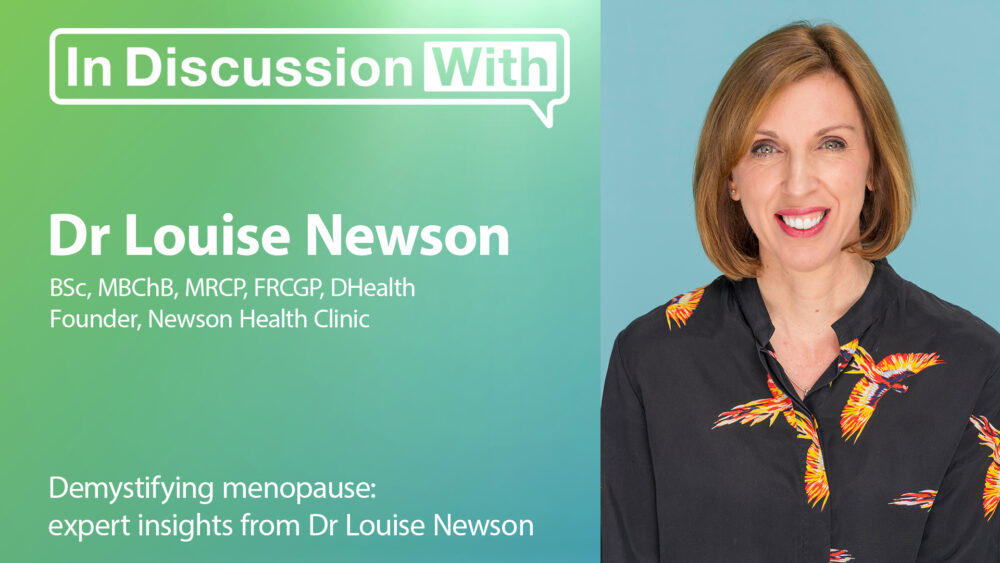
The management of menopause and perimenopause often presents healthcare professionals (HCPs) with questions that require careful, evidence-based responses. In this interview Dr. Louise Newson, a physician and female hormone specialist, author and researcher, offer expert insights into some of the common and challenging questions that arise in discussions about management of the menopause and perimenopause.
HRT Safety: Disentangling Breast Cancer Risk
One common query is whether hormone replacement therapy (HRT) increases the risk of developing breast cancer. The direct answer is often no, but the distinction between hormone types is crucial: the only type of HRT shown to be associated with a non-statistically significant increased risk is medroxyprogesterone acetate (a synthetic progestogen). Oestradiol, progesterone, and testosterone have not been shown to be associated with an increased risk of breast cancer.
The use of HRT in women with a history of breast cancer is challenging because comprehensive studies are lacking and historical data often included synthetic hormones such as tibolone. Moreover, many women have been told that they cannot have hormones because they’ve had breast cancer. However, “an oestrogen receptor positive breast cancer doesn’t mean it’s been caused by oestrogen and it doesn’t mean that oestrogen per se is all bad”, says Dr Newson. She often prescribes testosterone for women who have had oestrogen receptor positive breast cancer, and this can significantly improve symptoms and potentially improve prognosis.
Women who are BRCA-gene positive and have undergone prophylactic bilateral mastectomy or bilateral oophorectomy, can usually safely receive body-identical hormones. Studies, though small, suggest that women with the BRCA gene who have undergone oophorectomy and receive HRT may have a better prognosis, possibly due to the anti-inflammatory actions of hormones. “It’s really sad when I see women who have the BRCA gene [and] they’ve been told they can’t have hormones”, comments Dr Newson. Synthetic hormones should not be prescribed, she adds.
Genitourinary Syndrome of Menopause (GSM)
Genitourinary Syndrome of Menopause (GSM), formerly known as vulvovaginal atrophy (VVA), describes symptoms affecting the genital and urinary tracts. The term VVA is being phased out as “atrophy” means “withered and wasting away”, which may be seen as unduly negative.
GSM is very common, affecting 70–80% of menopausal women, but it is critical to recognise that it is not exclusive to menopausal women. It can also occur during perimenopause, in young women, those using oral contraceptives, or those breastfeeding, says Dr Newson. Beyond genital symptoms like dryness, soreness, and pain during intercourse, GSM includes significant urinary symptoms such as incontinence, urgency, and increased frequency. Most importantly, GSM is strongly linked to recurrent urinary tract infections (UTIs). Considering that urosepsis causes 30% of all sepsis cases, prevention is vital. Decades of data, dating back to the 1980s, show that the incidence of UTIs significantly reduces when women use vaginal hormones. Despite this powerful evidence, only a minority of women with GSM are prescribed these “transformational hormones,” which can also be safely used by women who have had breast cancer.
Neurokinin receptor antagonists (NK3RAs) for hot flushes
The neurokinin receptor antagonists elinzanetant and fezolinetant have been marketed to treat vasomotor symptoms (hot flushes). Originally developed as neuroleptics to help with psychosis, NK3RAs were found to reduce the frequency of hot flushes in women participating in trials. NK3RAs work by affecting the thermoregulatory zone in the hypothalamus and have been shown to reduce hot flushes compared to placebo.
However, significant caution is advised regarding their use. They have not been compared against the gold standard treatment (HRT) in clinical studies, which is unusual. Furthermore, because neurokinin receptors exist throughout the entire body, blocking them raises concerns about unknown long-term effects, explains Dr Newson.
Key concerns include:
- Hormone inhibition:NK3RAs may inhibit natural hormone production, potentially reducing oestradiol, progesterone, and testosterone levels, especially in the brain, which is the site of the commonest menopausal symptoms.
- Kisspeptin blockage:These drugs block kisspeptin, a protein known to inhibit metastatic spread. Given that NK3RAs are marketed heavily toward women with breast cancer, inhibiting this protective protein is a major concern regarding potential metastatic disease.
- Safety Data:Long-term data is lacking. One small study has raised concerns about an increased incidence of epithelial cancers in women taking these drugs and fezolinetant received a black box warning from the FDA related to deranged liver function.
Addressing the age myth and guidelines
The notion that women can be “too old” for HRT is a misconception stemming from the findings of the Women’s Health Initiative (WHI) study. The WHI study reported an increased incidence of cardiovascular disease (CVD) in women over 60. However, the study used synthetic hormones (conjugated equine oestrogens) and high doses in women often already suffering from established CVD. “It was really giving the wrong type of hormone, the wrong dose to the wrong woman”, says Dr Newson.
It is illogical to assume that the body responds differently to oestradiol at age 59 versus age 61. Synthetic hormones are pro-inflammatory, which is detrimental, especially to older individuals or those with established CVD.
When starting HRT for older women who have “missed out”, Dr Newson advocates beginning with a low-dose transdermal oestradiol and progesterone, sometimes adding testosterone, and then allowing the patient to choose. While randomised controlled trials (RCTs) for natural hormones will never be available (because they would be considered unethical given the known benefits), personalised care and patient choice remain paramount, emphasises Dr Newson.
Finally, HCPs must critically assess guidelines. The latest NICE guidelines state that first-line treatment for the majority of women is hormones. However, the analysis failed to distinguish between synthetic and natural hormones due to a perceived lack of RCT data, meaning the guidelines conflate treatments with different risk profiles. Furthermore, a word search of the guidelines reveals a disproportionate focus on the word “risk” and the topic of “breast cancer” compared to “benefit” and “osteoporosis,” reflecting a potential bias. Effective menopause management requires applying the guidelines while prioritising the art of medicine and individualisation of care, says Dr Newson.
About Dr Louise Newson
Dr Louise Newson is a GP and menopause specialist. She is the founder of Newson Health and Newson Education. She developed the Balance app (a menopause support app) and the Confidence in Menopause course for health care professionals. She is the author of the best-seller, The Definitive Guide to the Perimenopause and Menopause and hosts a website that provides a wealth of articles, podcasts and other information.