Wegovy reduced liver fat to normal levels in 9 out of 10 adults with obesity and excess liver fat at EASD2026 – Novo
Novo Nordisk presented post hoc analysis of data from a STEP UP trial sub-population with 55 participants, showing that Wegovy® (pooled semaglutide 7.2 and 2.4 mg) reduced liver fat in adults with obesity without diabetes.
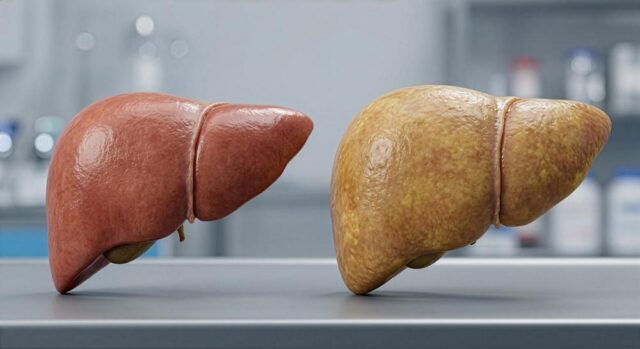
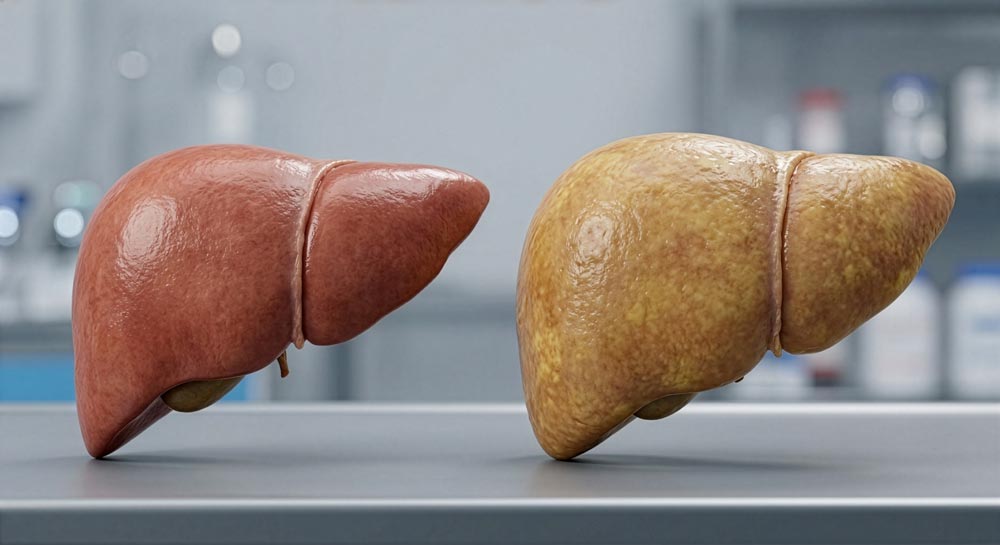
Change in percentage of liver fat, determined by magnetic resonance imaging (MRI), showed that mean liver fat in the group taking semaglutide declined from 8.8% at baseline to 3.1% at week 72. In addition, the analysis showed that 26 participants entered the trials with liver fat above 5% and 88.5% of them – 23 participants – reached the below-5% threshold by week 72, bringing their liver fat to normal levels. The findings are presented at the European Association for the Study of Diabetes (EASD) Annual Meeting 2026 in Milan, Italy.
“This analysis showed that semaglutide reduced liver fat and was linked to better overall liver health in adults with obesity,” said Eric Lawitz, MD, Texas Liver Institute and University of Texas Health San Antonio. “These findings suggest semaglutide may help address liver disease early – before it becomes a serious health problem – that could harm the heart, kidney, liver and metabolic health in the long term. This is important because as many as three in four people with obesity may have excess liver fat.“
What was the STEP UP pooled analysis of liver health?
The post hoc explorative analysis pooled 1,919 adults across STEP UP and STEP UP T2D, of whom 1,312 received semaglutide 7.2 mg, 304 received semaglutide 2.4 mg, and 303 received placebo.2,3 At baseline, more than 94% of participants across all groups were classified as high risk for fatty liver by the Fatty Liver Index (FLI), while fewer than 1% met criteria for advanced fibrosis risk by the FIB-4 index. The population was therefore representative of individuals with obesity with high risk of metabolic dysfunction-associated steatohepatitis (MASH), but with low baseline burden of advanced liver disease.
A direct quantification of liver fat in the 55 participants with excess liver fat was determined by the non-invasive magnetic resonance imaging–proton density fat fraction (MRI-PDFF), which is the gold-standard imaging technique for quantifying hepatic steatosis.
“These findings help us look beyond the number on the scale and better understand the quality of the weight loss seen with semaglutide”, said Filip Knop, senior vice president and chief medical officer at Novo. “Our dedicated ESSENCE MASH trial demonstrated reversal of damage in the liver in people with MASH on semaglutide treatment, and this analysis from our STEP UP obesity trial reinforces semaglutide’s beneficial impact on liver health in people with obesity.”
Novo is investigating semaglutide 2.4 mg in MASH, and today it is approved for the treatment of MASH, under the brand name Wegovy, in the United States, Canada, the United Kingdom, China and several other markets. Semaglutide 7.2 mg is not being investigated for the treatment of MASH.
About the STEP UP trial programme
STEP UP and STEP UP T2D were phase 3b randomised, double-blind, placebo-controlled trials evaluating semaglutide 7.2 mg once weekly versus semaglutide 2.4 mg and placebo for weight management. STEP UP enrolled adults with obesity (BMI ≥30 kg/m²) without diabetes; STEP UP T2D enrolled adults with obesity and type 2 diabetes. The primary endpoints were change in body weight and proportion of participants achieving ≥5% weight loss at week 72. The pooled analysis presented at EASD 2026 is a post hoc, exploratory analysis of liver-related indices and metabolic measures and was not a pre-specified primary or secondary endpoint of the parent trials.
About ESSENCE
ESSENCE is an ongoing phase 3 trial evaluating the effect of once-weekly injectable semaglutide 2.4 mg in people with MASH and moderate to advanced liver fibrosis (stage F2 or F3). The trial randomised 1,197 participants 2:1 to receive semaglutide 2.4 mg or placebo, on top of standard of care, for a total of 240 weeks. In part 1, the objective was to demonstrate that treatment with semaglutide 2.4 mg improved liver histology at 72 weeks based on biopsy sampling from the first 800 randomised patients. Semaglutide 2.4 mg led to superior improvement in liver fibrosis with no worsening of steatohepatitis, as well as resolution of steatohepatitis (removing fat, inflammation in liver cells and improving structural integrity of liver cells) with no worsening of liver fibrosis compared to placebo. Results from part 2 are expected in 2029.