New ICOTYDE data in difficult-to-treat plaque psoriasis affirms its use as a powerful first line systemic therapy – Johnson & Johnson
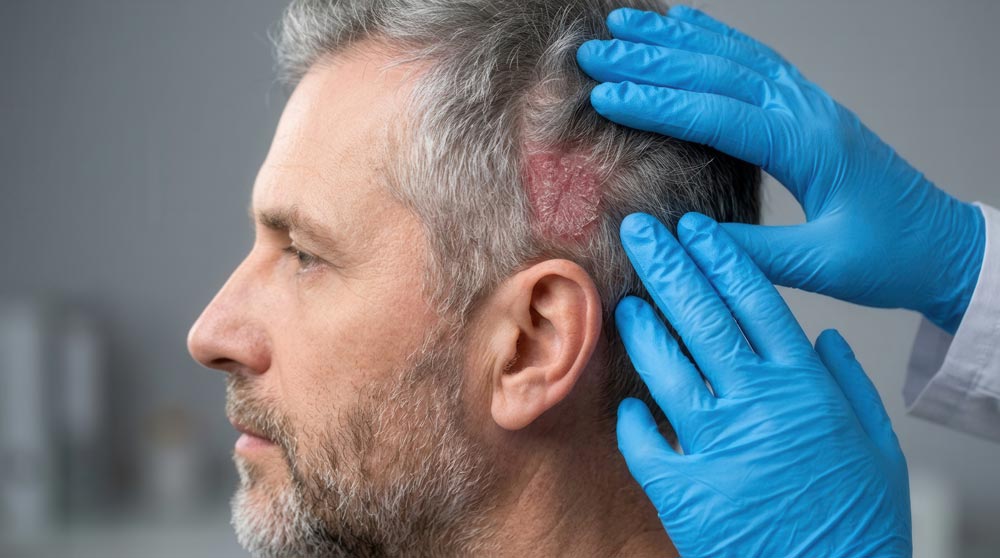
Johnson & Johnson announced new two-year data from the Phase 3 ICONIC-TOTALa study demonstrating the positive impact of ICOTYDE (icotrokinra) on high-impact plaque psoriasis (PsO) sites. ICOTYDE is the first and only targeted oral peptide that precisely blocks the IL-23 receptor, in adults and pediatric patients 12 years of age and older (adolescents).
The late-breaking results, shared at the European Academy of Dermatology and Venereology (EADV) Congress 2026, evaluated adults and adolescents with at least moderate high-impact site involvement. Through Week 112, ICOTYDE demonstrated sustained skin clearance.
“People with plaque psoriasis that affect high-impact sites deal with severe functional disability and intense daily pain. Even when these affected areas cover a small percentage of the body, they often do not respond to topical creams, limit activity, and degrade mental health due to unrelenting symptoms,” said Richard B. Warren, M.D., Ph.D., Professor of Dermatology, University of Manchester. “These robust two-year data validate that ICOTYDE provides enduring skin clearance with a favorable safety profile, making it a pivotal advancement in plaque psoriasis treatment.”
ICOTYDE clinical data highlights
• Among patients treated with ICOTYDE, rates of clear or almost clear skin (Investigator’s Global Assessment [IGA] 0/1)
increased from 57% at Week 16 to 67% at Week 24 and 70% at Week 112.
• At Week 112, high rates of site-specific complete skin clearance were reported among ICOTYDE-treated patients:
• 60% of patients with scalp psoriasis achieved a scalp-specific Investigator’s Global Assessment (ss-IGA)
score of 0;
• 89% of patients with genital psoriasis achieved a Physician’s Global Assessment of Genitalia (sPGA-G)
score of 0;
• 63% of patients with psoriasis affecting the hands and/or feet achieved a hand and/or foot Physician’s Global Assessment (hf-PGA)f score of 0.
• Nail psoriasis improved over time, with mean percentage improvement in modified Nail Psoriasis Severity Index (mNAPSI)g increasing from 33% at Week 16 to 62% at Week 52 to 71% at Week 112.
• Safety findings through Week 112 remained consistent with the established safety profile of ICOTYDE, with no news afety signals identified.
“Availability of long-term data are vital for informing the treatment of plaque psoriasis including particularly challenging areas of the body where conventional treatments may fall short,” said David M. Lee, M.D., Ph.D., Global Immunology Therapeutic Area Head, Johnson & Johnson. “These two-year ICOTYDE results empower physicians to treat high-impact sites, knowing that data support sustained clinical outcomes for patients.”
About the ICONIC clinical development program
The pivotal Phase 3 ICONIC clinical development program includes four studies of ICOTYDE in patients with moderate-to severe plaque PsO.
• ICONIC-LEAD (NCT06095115) is a RCT to evaluate the efficacy and safety of ICOTYDE compared with placebo in participants with moderate-to-severe plaque PsO, with PASI 90 and IGA score of 0 or 1 with at least a 2-grade improvement as co-primary.
• ICONIC-TOTAL (NCT06095102) is a RCT to evaluate the efficacy and safety of ICOTYDE compared with placebo for the treatment of PsO in participants with at least moderate severity affecting special areas (e.g., scalp, genital, and/or hands and feet) with overall IGA score of 0 or 1 with at least a 2-grade improvement as the primary endpoint.
• ICONIC-ADVANCE 1 (NCT06143878) and ICONIC-ADVANCE 2 (NCT06220604) are RCTs to evaluate the efficacy and safety of ICOTYDE compared with both placebo and deucravacitinib in adults with moderate-to-severe plaque PsO.