Extreme weather prompts spike in emergency care for people with dementia
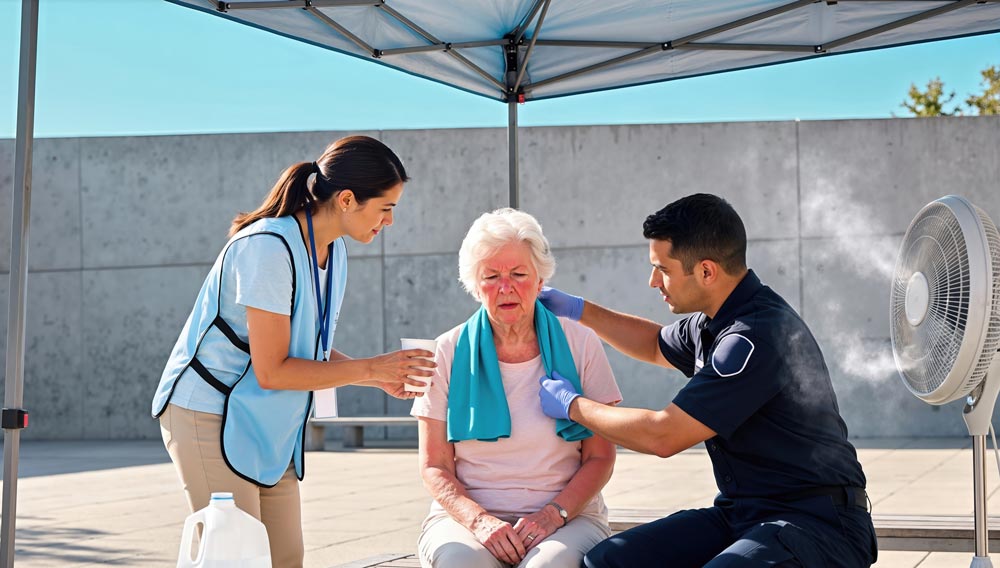
Exposure to extreme heat and cold is associated with an increased risk of emergency department (ED) visits among people living with dementia, according to data presented at the European Academy of Neurology (EAN) Congress 2026. The findings provide new evidence that environmental factors can have measurable effects on the health of people with neurological disorders.
Researchers from the IRCCS Institute of Neurological Sciences of Bologna, Italy, analysed ED visits recorded between 2015 and 2024 among 13,680 people with dementia and 2,755 people with Parkinson’s disease living in the municipality of Bologna to determine whether exposure to extreme temperatures was associated with an increased risk of ED attendance.
The analysis found that, for people with dementia, exposure to extreme heat (approximately 29.7°C, corresponding to the 95th percentile of observed temperatures) was associated with an 11% increase in ED visits within the first three days following exposure. Exposure to extreme cold (approximately 1.5°C, corresponding to the 5th percentile of observed temperatures) was associated with a delayed increase in risk, reaching 14% around 10 days after exposure.
The strongest heat-related effect was observed among people with dementia aged 70–90 years, whose risk of ED attendance increased by 19% within the three days after the exposure.
In contrast, there was no clear evidence that extreme temperatures increased ED visits among people with Parkinson’s disease. They caution that the smaller Parkinson’s disease cohort may have limited the statistical power of the analysis and that different temperature thresholds may be relevant for this population.
The researchers also observed a phenomenon known as a “harvesting effect”, whereby periods of increased ED attendance were followed by a temporary reduction in risk. This suggests that extreme temperatures may accelerate health events that would otherwise have occurred later.
‘In both hot and cold conditions, we observed evidence that extreme temperatures may accelerate health events that would otherwise have occurred later,’ said lead author Dr Luca Vignatelli. ‘This concentration of healthcare demand may have organisational implications for health services.’
The researchers believe several biological and behavioural mechanisms may explain why people with dementia appear particularly vulnerable to extreme temperatures. ‘The first is an indirect effect, whereby physiological stress is induced in a frail body,’ Dr Vignatelli explained. ‘The second, which is less obvious and still needs to be proven, is that extreme temperatures may accelerate neurodegenerative pathogenic mechanisms.’
Behavioural factors may also play an important role. ‘It is possible that a person with dementia may fail to adopt protective behaviours because cognitive impairment reduces their perception of risk,’ Dr Vignatelli said. ‘In individuals with Parkinson’s disease, this may be less evident, as cognitive impairment is less common and generally occurs later in the course of the disease.’
The findings may have implications not only for patients and carers but also for healthcare systems planning for periods of extreme weather. The researchers say the findings highlight the need for measures to better protect vulnerable populations during periods of extreme weather.