Foundayo shows cardiovascular safety plus sustained A1C and weight reductions in largest T2D study – Eli Lilly
Eli Lilly and Company announced detailed results from the Phase 3 ACHIEVE-4 trial evaluating the efficacy and safety of Foundayo (orforglipron) compared to titrated insulin glargine in adults with type 2 diabetes and obesity or overweight at increased cardiovascular risk.
In the trial, which is the largest and longest study of this medicine in type 2 diabetes to date, Foundayo demonstrated a non-inferior risk of major adverse cardiovascular events (MACE) and improved A1C, weight and other key measures of cardiometabolic health compared with insulin glargine. Results from the trial were presented at the 62nd Annual Meeting of the European Association for the Study of Diabetes (EASD) in Milan, Italy, and simultaneously published in The Lancet.
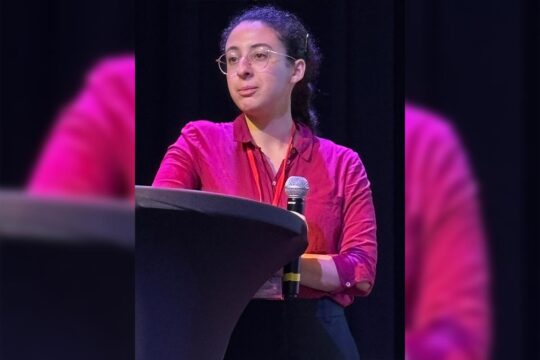
“For people living with type 2 diabetes, protecting the heart is as important as controlling blood sugar,” said Klara Klein, M.D., Ph.D., Assistant Professor of Medicine, University of North Carolina School of Medicine. “ACHIEVE-4 reaffirmed the safety of orforglipron and demonstrated an association with a lower risk of major cardiovascular events and death. These results, paired with the simple administration of a once-daily pill, taken without fasting or water restrictions, could make orforglipron a compelling potential option across the globe.”
In the trial, the risk of cardiovascular death, heart attack, stroke, or hospitalization for unstable sudden chest pain (MACE-4) was 16% lower for Foundayo vs. insulin glargine (hazard ratio: 0.84; 95.0% CI: 0.59 to 1.20), meeting the prespecified criteria for demonstrating non-inferiority (upper limit of 95.0% CI of the hazard ratio < 1.8). The risk of cardiovascular death, heart attack, or stroke (MACE-3) was 23% lower for Foundayo vs. insulin glargine (hazard ratio: 0.77; 95.0% CI: 0.52 to 1.13). In pre-planned analyses, the risk of cardiovascular death was 53% lower (hazard ratio: 0.47; 95.0% CI: 0.25 to 0.90) and the risk of all-cause death was 57% lower (hazard ratio: 0.43; 95.0% CI: 0.25 to 0.75) for Foundayo vs. insulin glargine.
In addition to demonstrating cardiovascular safety, Foundayo was associated with meaningful improvements across multiple cardiovascular risk factors. At week 52, participants treated with Foundayo experienced reductions in waist circumference by 7.0 cm, systolic blood pressure by 4.4 mmHg, triglycerides by 18.9%, non-HDL cholesterol by 6.6% and hsCRP, a marker of inflammation, by 38.9%. Foundayo was also associated with a slower decline in kidney function, a key contributor to cardiovascular risk, including a 2.8 mL/min/1.73 m² smaller reduction in eGFR and a 27.1% greater reduction in albuminuria compared to insulin glargine.
“Foundayo has consistently delivered strong efficacy in type 2 diabetes across our Phase 3 ACHIEVE program,” said Thomas Seck, M.D., senior vice president of product development, Lilly Cardiometabolic Health. “In ACHIEVE-4, our largest and longest study of this medicine, Foundayo helped more than half of participants reach an A1C of 6.5% or lower, with durable reductions in A1C and body weight and a favorable overall safety profile. This kind of efficacy reinforces our confidence that Foundayo could change how physicians and patients approach the treatment of type 2 diabetes.”
The overall safety and tolerability profile of Foundayo in ACHIEVE-4 was generally consistent with previous trials and with other incretins. The most common adverse events for participants taking Foundayo were nausea, vomiting, diarrhea, decreased appetite, and constipation. During the 52-week minimum treatment period, 10.6% of participants taking Foundayo discontinued treatment due to adverse events.
To further evaluate the impact Foundayo has on cardiovascular outcomes in adults with obesity or overweight with or without type 2 diabetes, Lilly is conducting ATTAIN-OUTCOMES, an ongoing Phase 3 study in adults with established cardiovascular or kidney disease.
About ACHIEVE-4 and ACHIEVE clinical trial program
ACHIEVE-4 (NCT05803421) is a Phase 3, event-driven, randomized, open-label trial evaluating the efficacy and safety of Foundayo compared with insulin glargine U-100 in adults with type 2 diabetes and obesity or overweight (BMI ≥25 kg/m2) with increased risk of cardiovascular events. The trial randomized 2,749 participants across the U.S., Argentina, Austria, Brazil, Czechia, Germany, Greece, India, Italy, Mexico, Puerto Rico, Romania, Slovakia, South Korea, Spain and Turkey to receive either escalating doses of Foundayo or insulin glargine. The primary objective of the study was to demonstrate that Foundayo was non-inferior in the risk of major adverse cardiovascular events (MACE-4) compared to insulin glargine in adults with type 2 diabetes and obesity or overweight with increased risk for cardiovascular events who have taken at least one and no more than three oral anti-diabetic medications for at least 90 days prior to study start. Study participants had an A1C between ≥7.0% and ≤10.5% (≥7.5% and ≤10.5% if background diabetes medication included a sulfonylurea) and a BMI of ≥25 kg/m2 with stable weight (±5%) for at least 90 days prior to study start. Participants randomized to Foundayo initiated treatment with 0.8 mg once daily and increased the dose every four weeks until reaching a maximum tolerated dose (up to 17.2 mg). The trial was conducted using an investigational formulation of Foundayo at dosages equivalent to Foundayo tablets.
The ACHIEVE Phase 3 global clinical development program for Foundayo began in 2023 and enrolled more than 6,000 people with type 2 diabetes across five global registration trials.
Citation: Cardiovascular safety of orforglipron versus insulin glargine in adults with type 2 diabetes at increased cardiovascular risk (ACHIEVE-4): a phase 3, event-driven, randomised, open-label, non-inferiority, active comparator trial. Authors: Klara R Klein, MD ∙ Prof Carol Wysham, MD ∙ Prof Katherine R Tuttle, MD ∙ Prof Melanie J Davies, MD et al. The Lancet. Published September 30, 2026. DOI: 10.1016/S0140-6736(26)01865-9