Imaging shows brain ages faster in people with disorders
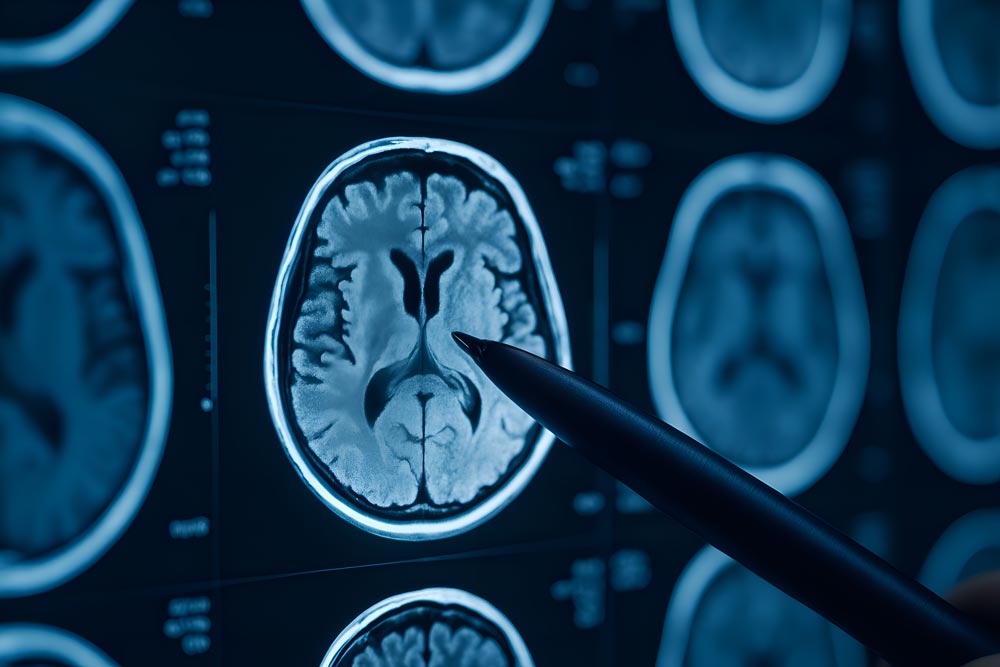
People with dementia, mild cognitive impairment, alcohol addiction, or psychiatric disorders such as schizophrenia show increased brain ageing, each in specific patterns within the brain, according to a study published in PLOS Medicine by researchers at Nanjing University of Aeronautics and Astronautics, China.
Some conditions can make the brain age faster. Scientists calculate how old the brain is relative to the body using the predictive age difference (PAD), the difference between chronological age and the age predicted by brain imaging, where a positive PAD indicates that ageing is accentuated or increased.
To better understand how brain disorders and divergences might affect brain ageing, the authors of this study collected structural magnetic resonance imaging (MRI) data from 45,900 controls across several brain imaging banks, and compared them with of 2,698 patients with different brain conditions and differences, including attention-deficit/hyperactivity disorder (ADHD), autism spectrum disorder (ASD), alcohol or tobacco addiction, Alzheimer’s disease (AD), mild cognitive impairment (MCI), schizophrenia, bipolar disorder or major depressive disorder.
The team, led by Professor Shile Qi, found that neurodegenerative disorders of AD and MCI had the largest association with a high PAD. Addiction and psychiatric disorders were also associated with increased PAD. In contrast, there were no differences in PAD between people with ADHD or ASD and controls.
The researchers also looked at PAD values in specific areas of the brain, and examined which genes showed increased expression in people with different brain conditions. The prefrontal cortex showed higher PAD across brain disorders. Higher PAD in the frontal and temporal lobes was associated with psychiatric disorders, while high PAD in the frontal and occipital cortex was associated with dementia. Addiction was connected with high PAD in the default mode network, and in the salience network and the putamen and thalamus.
The results are correlational, and not causal, and while some conditions such as psychiatric disorders and addiction have high co-occurrence, the authors suggest that understanding more about PAD could help provide biomarkers for commonly occurring brain disorders.
‘Different neurological disorders appear to leave different signatures on the brain ageing clock, which may help researchers better understand the neural and biological pathways involved in these conditions,’ the authors say.