Can educational videos improve patient care?
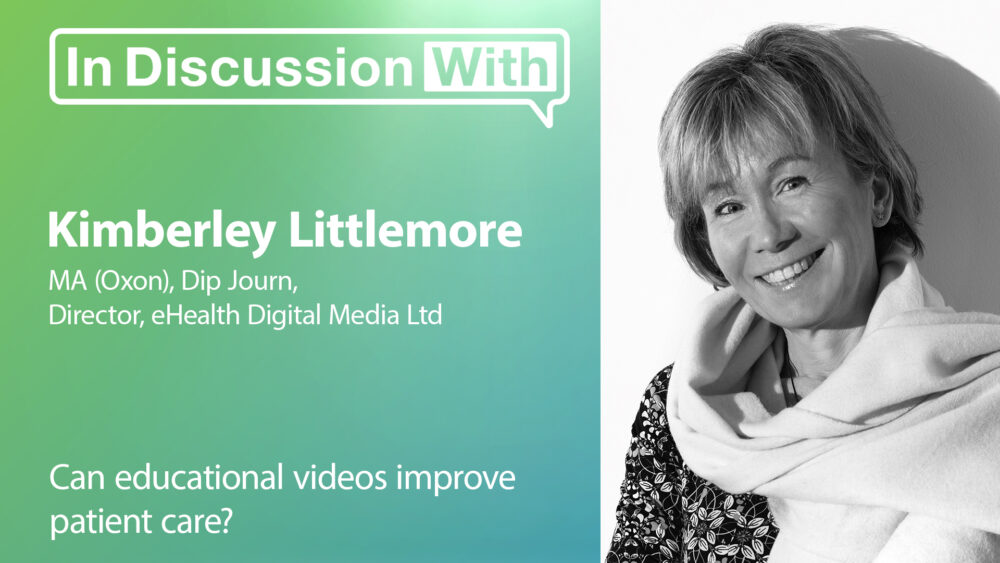
An award-winning BBC documentary filmmaker has turned her skills towards a different kind of storytelling — one aimed not at television audiences, but at patients and healthcare professionals managing chronic conditions. In this interview, Kimberly Littlemore, founder of PocketMedic, describes how she applies the principles of behaviour change and documentary filmmaking to produce short educational films, and presents evidence from a growing body of research demonstrating their clinical impact.
From the BBC to behaviour change
Kimberly Littlemore spent many years as a documentary filmmaker at the BBC, working across science, health and international topics. For a decade she worked closely with Comic Relief and Sport Relief, collaborating with writer Richard Curtis on fundraising films that reached millions of viewers on Red Nose Day. While travelling in Africa, India and South America for this work, she repeatedly observed community health workers striving to communicate vital health information — about malaria, HIV transmission, and diabetes — to their local populations, often with limited resources.
“I really wanted to make films in local languages for community health workers, to help them train and spread their message as far and wide as possible,” she explains. Before she could pursue this ambition, however, she encountered an opportunity closer to home.
In 2013–2014, while living in Wales, she met Professor Sam Rice, a consultant endocrinologist, who challenged her to address a pressing local problem. Diabetes rates in Wales were high, many people were unaware of their diagnosis, and those referred to diabetes education courses were failing to attend. “The statistics were really poor,” recalls Ms Littlemore. “He said, can you help me?” Together, they produced a series of short films about diabetes management, presented by Dr Jane Gilbert. The results, subsequently published in the European Journal of Diabetes, showed a significant improvement in HbA1c over three months among those who watched the films — an improvement that compared favourably with outcomes seen with metformin and was better than those attending a diabetes course. This early evidence convinced Ms Littlemore that her documentary skills could be powerfully applied to health behaviour change.
PocketMedic: the model
PocketMedic was founded on a core insight: it is not enough to provide information. To drive behaviour change, films must first understand why people fail to do what is good for them. “It’s very easy to be a little bit lazy and just make films about information,” says Ms Littlemore. “But until you really understand what stops people doing things that are going to be good for them, you can’t really get to grips with the challenges that people face.”
She draws on self-determination theory and applies the documentary storytelling techniques she honed at the BBC — filming people in their homes, focusing on relatable human stories, and making content that feels relevant to everyday life. The approach was further refined by a personal experience: after sustaining an injury and looking online for physiotherapy guidance, she found the available content uninspiring. “They were all people in white studios with gym balls. We could do this so much better if we did it in the home,” she says.
The result is a library of short, accessible films on topics ranging from diabetes and COPD to lymphoedema and dementia, all freely available at https://pocketmedic.org. Films are hosted on YouTube, making them easy to watch on a phone or computer at any time. Clinicians routinely refer patients directly to relevant films, and Ms Littlemore personally responds to viewer feedback received through the contact button on each page.
Evidence of impact
PocketMedic has accumulated a growing evidence base across several clinical areas:
- Physiotherapy: An early study found that people who watched PocketMedic physiotherapy films not only improved their ability to perform exercises correctly but also showed better adherence, with fewer missed follow-up appointments.
- Diabetes: The landmark Wales study demonstrated a significant HbA1c improvement over three months in patients who watched the diabetes films, outperforming both metformin and formal diabetes education courses. Only 28% of those offered the films chose to watch them — but among those who did, the clinical benefit was clear.
- COPD: A PhD study by Dr Liam Knox examined the impact of PocketMedic’s COPD self-management films compared with pulmonary rehabilitation. There was no significant difference in outcomes between those who attended the course and those who watched the films alone, suggesting the films are a clinically effective alternative for patients with transport or accessibility barriers. Patients who had completed pulmonary rehabilitation noted that access to the films while waiting for their course would have been particularly valuable.
- Colonoscopy preparation: Working with Professor Tony Rahman at Prince Charles Hospital in Brisbane, Australia, PocketMedic developed a film series to support patients preparing for colonoscopy or endoscopy. Previously, inadequate bowel preparation meant procedures were frequently abandoned. Since the films were introduced, patients arrive better prepared and more confident, the number of appointments required per patient has fallen, and Professor Rahman has noted a positive impact on polyp detection rates — with potential downstream benefits for cancer outcomes. This project received a Royal College of Physicians International Excellence Award.
- Insulin safety for healthcare professionals: In collaboration with the Cambridge Diabetes Education Programme (CDEP), PocketMedic produced a suite of films on the safe use of insulin in hospital, a high-risk area associated with serious prescribing errors. A study led by Professor Gerry Rayman at the University of East Anglia assessed knowledge in 620 healthcare professionals before and two months after watching the films. Staff knowledge improved in nine out of ten assessed areas, and crucially, insulin errors fell from 26% to 14%. The films are embedded in CDEP training courses and have been viewed hundreds of thousands of times.
The films have also been used by a lymphoedema specialist network in Wales, led by Dr Melanie Thomas, to help patients manage complex daily routines involving garments, drainage and skin care — offering what Dr Thomas described as a way of “delivering herself into everybody’s living room.”
Reach: from rural Wales to Saint Helena
One of the most striking examples of PocketMedic’s reach involves the remote island of Saint Helena, in the South Atlantic Ocean. A UK diabetes specialist nurse deployed there found high rates of diabetes among the local population, very limited educational materials, and poor patient engagement with existing resources. Having previously encountered the PocketMedic films at a conference or course, she contacted Ms Littlemore. Because of limited Wi-Fi connectivity on the island, the films were loaded onto a USB drive and installed in clinics across the island. According to reports, the films have been well received and are making a real difference to diabetes education there.
This example illustrates a broader point: the film format is inherently flexible and portable. It can reach patients who cannot or will not attend formal education programmes, those in remote or under-resourced settings, those with learning difficulties, and those who simply prefer to learn in their own time and space.
Expanding into dementia
Ms Littlemore’s most recent work has focused on dementia, driven in part by personal experience: both her parents lived with dementia, and she cared for them during the COVID-19 lockdown period. Unable to find useful filmed content about the lived experience of dementia, she placed fixed cameras in her parents’ home over the course of a year and used the footage as the basis for discussions with clinicians and academics. The resulting material informed a commissioned dementia film series, which is now being used for carer training by the Gloucestershire Integrated Care Board. Since becoming available in February 2025, these films have already been viewed more than 7,000 times.
Ms Littlemore is now developing a dementia awareness app aimed at three groups: people noticing early cognitive changes, those who have recently received a diagnosis, and family carers. Its aim is to broaden understanding of dementia beyond memory loss, addressing its impact on perception, attention and the senses. The app draws on the Alzheimer’s Society finding that 85% of people diagnosed with dementia wish to remain at home for as long as possible. “I’m basically trying to create something that’s currently missing,” she says.
Why it works
Ms Littlemore attributes the success of the PocketMedic approach to a combination of factors. Films are made using the same principles she applied to BBC fundraising content: finding common humanity in individual stories, filming in real homes and environments, and addressing the psychological barriers to behaviour change rather than simply providing instructions. The films are accessible via smartphone, available on demand, and free at the point of use. They can complement — or in some cases substitute for — formal education programmes, particularly where access is difficult.
For healthcare professionals, the films offer a practical tool: a clinician can simply direct a patient to a specific film on the PocketMedic website, or refer them by saying “Go to Google and search PocketMedic and diabetes.” Ms Littlemore is also keen to collaborate with clinicians and organisations interested in developing new content or exploring applications in areas not yet covered.
About Kimberly Littlemore
Kimberly Littlemore is the founder of PocketMedic and Director of eHealth Digital. She is also Honorary Research Associate, Faculty of Medicine, Health and Life Science, Swansea University.
She is a former award-winning BBC documentary filmmaker with extensive experience in health, science and international affairs. Her work on colonoscopy preparation films received a Royal College of Physicians International Excellence Award. She is a member of the International Federation of Aging and works with clinical and academic partners internationally to develop film-based health education content. Clinicians or researchers interested in collaborating can contact her at kim@ehealthdigital.co.uk.
The PocketMedic film library is freely accessible at https://pocketmedic.org or via a Google search for “PocketMedic” and the relevant condition.